Best of North India
Duration: 15 Nights / 16 Days
Destination: Jaipur – Ranthambhore - Bharatpur – Agra – Bandhavgarh – Khajuraho- Varanasi – New Delhi – Fly Back Home
Day 01. Arrival in Delhi (By Flight)
Delhi the capital of India, is a historical city, which attracts the tourists because of its historical past. This city is one of the oldest city with lots of monuments and temples that are a sight to watch. Any visitor’s visit to this city will go incomplete without a visit to these historical places. Delhi is a 1000 years old city with great market places which fancy of a lot of exquisite stuff which is worth having a glimpse of. When you arrive at the airport in New Delhi you will be received by the representatives of Nature Safari who will then take you to the Hotel. Overnight at New Delhi.
Day 02. In New Delhi
Morning: Visit the Old City of Delhi to see the historic Red Fort and the Jama Masjid, India’s largest mosque from the outside. See the colourful bazaar of Chandni Chowk and take a cycle rickshaw ride through the back streets of Old Delhi to get a first hand experience of the hustle and bustle of this traditional city. This ride through the small by-lanes will be most fascinating. Return to the hotel for lunch or eat at an interesting restaurant in town
Afternoon: Visit New Delhi, seeing the Qutab Minar, a tower of victory built in the 12th century and India Gate - the war memorial. Drive past the Rashtrapathi Bhawan, the residence of the President of India, the houses of Parliament and the Government Secretariat buildings. Overnight in Delhi.
Day 03. Delhi - Agra (about 260 km/ 5 hrs)
After breakfast drive to Jaipur, 260kms, 5 hours drive, on arrival check into hotel.
Jaipur - the capital of Rajasthan, is colour washed pink - the colour associated with hospitality in Rajput culture. This Pink City of fairy tale palaces, rugged fortresses perched on barren hills and broad avenues, is picturesque. The first planned city of its time, Jaipur is encircled by a formidable wall. Overnight in Jaipur.
Day 04. In Jaipur
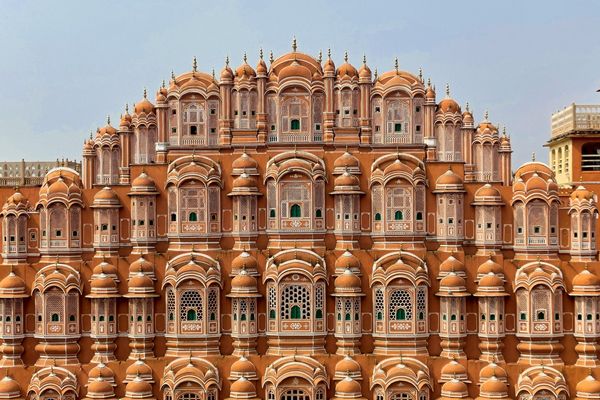
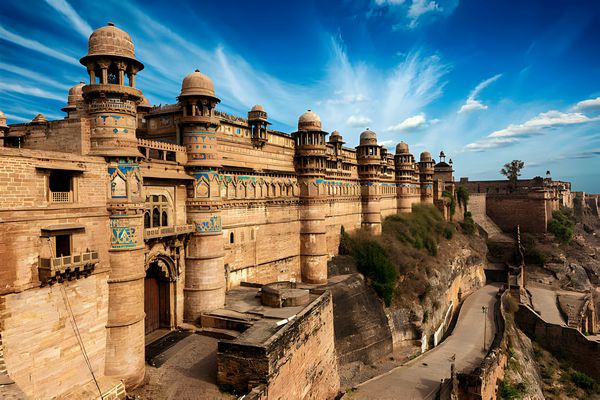
Morning proceed on an excursion to Amber Fort with an Elephant ride upto the top of the Fort. Drive past Hawa Mahal, known popularly as the Palace of Winds, is a facade built for the Ladies of the Royal household in the 19thcentury. The Amber Fort, the capital of the erstwhile State of Jaipur until 1728 is perched on a hill. It has halls of Public and Private audience, a Sheesh Mahal (hall of mirrors) various marble palaces which are marvelous examples of ancient Rajput architecture. The Temple of Amba (Mother Goddess), the patron deity of the Royal family is at the entrance to the palace. Ride an elephant to ascend the hill on which the Fort is situated.
Return to the town in the afternoon enroute visiting the City Palace - the former royal residence built in a blend of Rajasthani and Mughal styles which houses a museum with a superb collection of Rajasthani costumes and armoury of the Mughals and Rajputs, including swords of different shapes and sizes with ornate handles. It has an art gallery with an excellent collection of miniature paintings, carpets, royal paraphernalia and rare astronomical works in Arabic, Persian, Latin and Sanskrit. Also visit the Jantar Mantar - an astrological and astronomical observatory built by Maharaja Jai Singh in the 18th century, which is remarkable for its accuracy even in the present times. Overnight in Jaipur.
Day 05. Jaipur - Ranthambhore (about 180 km/ 3 hrs)
Morning after breakfast drive to Ranthambhore National Park. Lunch and afternoon game drive to The National Park. Dinner and overnight at Resort.
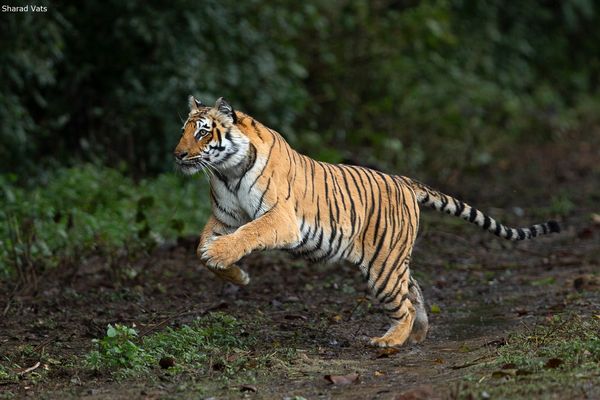
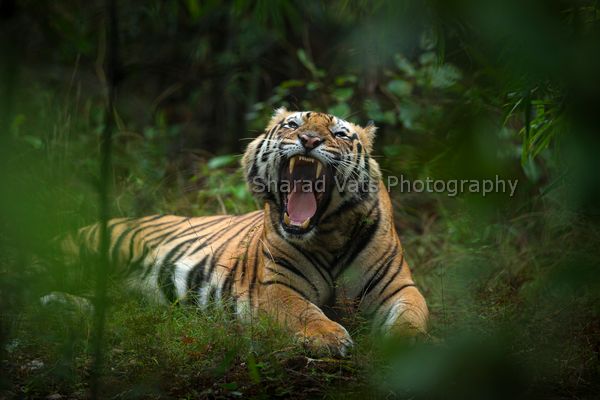
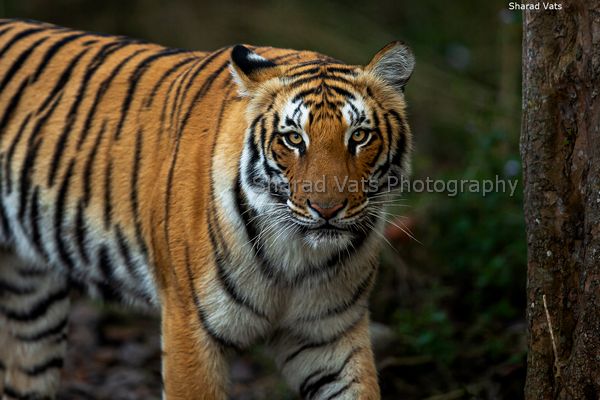
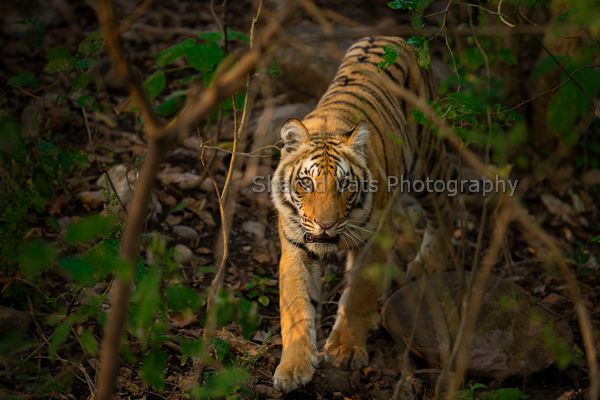
Ranthambore: With an area of 400 sq. km encompassing rocky hill crests which descend to open valleys between the Aravalli and Vindhya ranges, dotted with water pools and fruit trees, this park gets its name from the thousand year old fortress, which looms above the forest. Well known for the diurnal activity of tigers, Ranthambore is a very special and unusual area where a natural present meets a historical past. Sambar, cheetal, chinkara, nilgai and languor. The elusive leopard and tigers are found in this reserve with tourists standing a very good chance of seeing tigers during the day.
Dotted across the landscape are the crumbling ruins of its past glory, be it chatris or cupolas, like palaces or old guard posts, all of which reinforce the magical and ethereal quality of this great wilderness.
Lunch at the lodge and afternoon game drive to the national park with an English-speaking Naturalist.
Day 06. In Ranthambhore
Morning & Evening drives in the park. Breakfast, lunch and dinner at resort. Overnight in Ranthambore.During the day visit the famous Ranthambhore Fort. (12 kms. from the Resort) Perhaps the only one fort, which is not visible from a long distance. The Fort is a massive enclave and quite high. Mughal Emperor Shah Alam gifted it to Sawai Madho Singh I of Jaipur in 1754 AD and since then it was maintained as the private hunting preserve. Much later, Queen Elizabeth II and Duke of Edinburgh were part of the Royal Hunting, who stayed here too. It’s a unique Rajput Fort.
Archeological Department took it in 1964. It is 1578 ft fromthe sea level and 750ft from ground. Total area of the fort is about 7 miles. There is no drive way up to the fort, just the stairs. There are three big artificial lakes up in the Fort. Overnight Tiger Den Resort.
Day 07. Ranthambhore- Bharatpur (about 210 km/ 5 hrs)
Morning Game drive to the National Park later drive to Bharatpur 210 kms /5 hrs drive. On arrival Check into Hotel. Evening visit to the sanctuary.
Bharatpur is popular for its bird sanctuary - the Keoladeo Ghana National Park - finest in Asia, in which over 400 species of water birds. The sanctuary covers an area of 40 sq. km of swampy, lightly wooded terrain that was once the private hunting and shooting preserve of the Maharaja of Bharatpur. Today it is the protected breeding ground for many species of birds and also the home of migratory birds, especially of the Siberian Crane, that spends its winter here. Colonies of cormorants, spoonbills, storks, egrets, herons, pelicans, ibis and grey herons can be spotted all over the park, besides a fairly rich habitation of deer and snakes. [The best time to visit the park is from October though March] The park can be explored either by cycle rickshaws (the drivers are all very capable naturalists) or by boats on the lake.
Overnight in Bharatpur.
Day 08. Bharatpur- Agra
Morning : Visit the Bharatpur Keoladeo Ghana Bird Sanctuary by cycle rickshaws (the rickshaw drivers are all very capable naturalists and drive from the wilderness of the forests to the places of historic significance that marks our beginning to the next place of our trip. Agra and Fateh pur Sikri.
Fatehpur Sikri - This exquisite city built by Akbar the Great in 1569, in red sandstone, with its forts, palaces and mosques was abandoned 14 years after its creation due to political reasons. The Diwan-i-am - a vast courtyard in which the emperor gave daily public audience; Diwan-i-khas - a large quadrangle which contained all the major functions of the Palace, Pachisi court, the Emperors private living quarter, Jodha Bhai’s Palace, Mariam’s Palace, Birbal’s Palace, Hawa Mahal and Panch Mahal are some of the important buildings of this residential complex. The Friday Mosque and the exquisite tomb of Sheik Salim Chisti are in the religious grounds set aside in a separate enclosure adjacent to the secular buildings.
Continue drive to Agra after visiting Fatehpur Sikri (49 kms). On arrival, check in to the hotel.
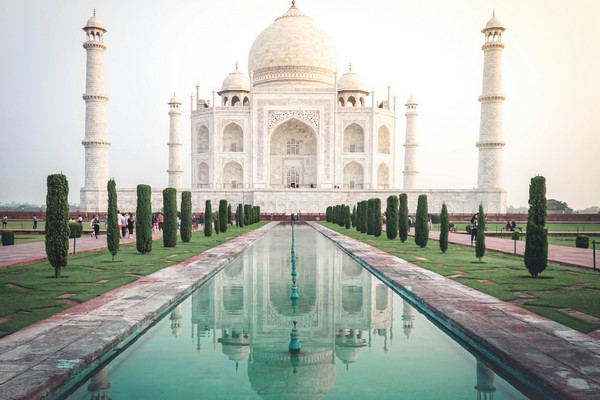
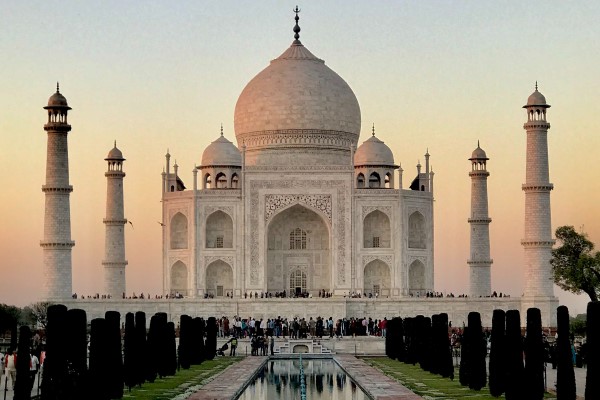
Agra is famous as the home to one of the Seven Wonders of the World - the Taj Mahal. The architectural splendour of the mausoleums, the fort and the palaces in Agra is a vivid reminder of the opulence of the legendary Mughal Empire. Agra was their capital for nearly a hundred years from 1564. A pleasant town, with a comparatively easy pace, Agra is known for its superb inlay work on marble and soapstone by artisans who are hereditary crafts persons. The city is also famous for its carpets, gold thread embroidery and leather shoes. Overnight in Agra.
Day 09. Agra- Katni By Train
Morning after breakfast proceed on a city tour of Agra. Visit the Agra Fort, built by three Mughal Emperors starting from Akbar the Great in 1565 AD, which is a masterpiece of design and construction. Within the fort are a number of exquisite buildings including the Moti Masjid, Jahangir’s Palace, Khas Mahal and the Sheesh Mahal, Diwane-i-Am, Diwane-i-Khas and Musamman Burj, where Emperor Shah Jahan, the fifth Mughal Emperor, died a prisoner. Later visit the Taj Mahal - the inimitable poem in white marble. Built over a period of 22 years, by the Mughal Emperor Shah Jahan in 1630, for his Queen Mumtaz Mahal to enshrine her mortal remains, it is one of the seven modern wonders of the World.
[ The Taj is closed on Friday]
Evening Take an 1st Class A/C Sleeper class overnight train to Katni (Bandhavgarh Tiger Reserve) at 1850 hrs .
We will oraganise your packed dinner for your overnight train journey. Reach railway station at 1830hrs. Our representative will be with you, when the train arrives at 1850hrs, he will assist you, take care of the porterage ,and make you comfortable in the train. Overnight train, bedding is provided by the Indian Railways within the train.
Day 10. Katni - Bandhavgarh (about 280 km/ 6 hrs)
Arrive Katni at 0515 hrs. And drive to Bandhavgarh National Park 95 kms / 2 hours drive. Morning and afternoon game drive to the national park. Meals and overnight at Resort.
Day 11. In Bandhavgarh
Morning and afternoon game drives, meals and overnight Jungle Lodge.
Bandhavgarh The national park is mainly known for its tiger population. This is the place where famous White Tigers of Rewa were discovered. The other wild attractions in the park include Nilgai, Chausingha, Chital, Chinkara, Wild Boar, a Fox and a Jackal. There are at least 22 mammal species and about 250 bird species in the Park. The grasslands in the park consist of chinkara (Indian gazelle), nilgai (blue bull) and chausingha (four-horned antelope) and wild boar. The dense forests contain sambhar (Indian stag), the muntjac (barking deer) and the herds of chital (spotted deer).
The other animals found in Bandhavgarh are ratel, porcupine, small Indian civet, palm squirrel, lesser bandicoot rat, the jungle cat, hyena and jackal, sloth bear, and the elusive Leopard. The reptile population in the park includes cobras, karaits, vipers, ratsnakes, pythons, lizards and turtles. The two primate species - the rhesus macaque and the Hanuman langur - inhabit the Bandhavgarh Park.
Day 12. In Bandhavgarh
Breakfast, Lunch and Dinner at the Lodge. Morning & Evening Jeep drive in the park. Overnight In Bandhavgarh.
HISTORY
Bandhavgarh has been a center of human activity and settlement for over 2000 years, and there are references to it.in the ancient books, the Narad-Panch Ratra and the Shiva Purana. Legend has it that Lord Rama, hero of the Hindu epic, the Ramayana, stopped at Bandhavgarh on his way back to his homeland after defeating the demon King Ravana of Lanka. Two monkey architects, who had engineered a bridge between the isles of Lanka and the mainland, are said to have built Bandhavgarh's fort. Later Rama handed it over to his brother Lakshmana who became known as Bandhavdhish "The Lord of the Fort". Lakshmana is the particular God of the fort and is regularly worshipped in a temple there. The oldest sign of habitation in the park are caves dug into the sandstone to the north of the fort. Several contain Brahmi inscriptions dating from the 1st century B.C. Various dynasties have ruled the fort, for example, the Maghas from the 1st century A.D., the Vakatakas from the 3rd century A.D., From that time onwards Bandhavgarh was ruled by a succession of dynasties including the Chandela Kings of Bundelkhand who built the famous temples at Khajuraho. The Baghel Kings, the direct ancestors of the present Royal family of Rewa, established their dynasty at Bandhavgarh in the 12th century. It remained their capital till 1617 when the center of court life moved to Rewa, 75 miles (120Kms) to the north. Without royal patronage Bandhavgarh became more and more deserted until forest overran the area band it became the royal hunting reserve. This helped to preserve the forest and its wildlife, although the Maharajas made full use of their rights.
At independence Bandhavgarh remained the private property of the Maharaja until he gave it to the state for the formation of the National Park in 1968. After the park was created poaching was brought under control and the number of animals rose dramatically. Small dams and water holes were built to solve the problem of water shortage. Grazing by local cattle was stopped and the village within the park boundaries was relocated. The Tigers in particular prospered and the 1986 extension provided much needed forest to accommodate them.

Bandhavgarh is justifiably famous for its Tigers, but it has a wide range of other game. The undergrowth is not as dense as in some northern terai forests, but the best time to see the park inhabitants is still the summer months when water becomes more scarce and the undergrowth dies back.
There are two types of monkeys common in the park, the rhesus macaque and the black-faced langur. Drives can also reveal jungle cats, hyenas, porcupines, ratels, and a variety of other mammals. Bandhavgarh attracts many migratory birds in the winter months, including the birds of prey like the steppe eagle and a variety of wildfowl.
If the early morning Safari is a thriller then the late afternoon rendezvous to get another glimpse of the Tiger, and watch the shadows grow taller as dusk approaches and the cacophony of birds grows louder in the trees, is not to be missed experience.
Day 13. Bandhavgarh-
Khajuraho (about 250 km/ 5 hrs)
Morning game drive to the a National park and later drive to Khajuraho 280 /6 hrs drive.
Khajuraho discovered by chance, India's second biggest single tourist attraction, Khajuraho has the largest group of medieval temples that are adorned with numerous sculptures of extraordinary grace and delicacy celebrating the stylized and refined courtly accomplishments of beauty, love and creative arts. Once the religious capital of the Chandela Rajputs, the temples of the city date from 950-1050 AD. A wall with eight gates encloses the entire area and two golden palm trees flank each of them. Originally, there were over 80 temples, of which only 22 now can be said remarkably preserved. The set of temples at Khajuraho celebrating Hindu religious thought in its mystifying variety of scope and inclusion stands distinguished from rest of the Hindu temples. The temples highlight the existential ethos in religion that venerates 'Yoga' and 'Bhoga'. 'Yoga' is union of the self with the Almighty, while 'Bhoga' is the path to God through physical pleasure. The temples at Khajuraho, dedicated to physical love and pleasure are a testimony to this philosophy. Declared a World Heritage Site in 1986, Khajuraho is a prominent, must-see destination and its temples are India's unique gift to the world as they capture life in every form and mood in stone.
Evening Sound and light show at Khajuraho. Overnight at Khajuraho.
Day 14. Khajuraho- Varanasi
Morning : visit the Eastern and Southern group of temples. The Parsvanath temple of the Eastern group is the group’s largest Jain temple. The themes depict, in charming detail, everyday activity. Also visit the Duladeo temple dedicated to Shiva and the Chaturbhuj temple of the Southern group.
Afternoon transfer to the airport to board the flight for Varanasi. Leave Khajuraho for Varanasi by 9W: 724 ( 1405 / 1445 hrs ) Meeting and assistance on arrival at Varanasi airport and transfer to the hotel.
Varanasi is one of India’s most important pilgrimage sites and the holiest of holy cities for Hindus. Known also as Kashi and Benaras, Varanasi is one of the world’s oldest living cities, and has been a centre of learning and culture for well over 2000 years.
Evening : Visit the “Ghats” or bank of the Ganga River. This is a fascinating walk as you can experience the cultural ethos that guides the life of the pious. See the rituals that take place to the setting sum and the ablutions that are performed in the river. As boats float down-stream, some carrying goods, fruits and vegetables, you will see others carrying the pious who perform ceremonies along the river. On the banks or “ghats”, you can see some absorbed in prayer and the chanting of hymns, and others engaged in commerce and yet others performing functions like hair-cutting, massaging and even cleaning ears! Walk across to the Manikarnika Ghat, where you can see cremation, performed with intense ritual - the process of sending the departed soul to the heavens. Hindus believe that the gateway to the Heavens and for the Re-incarnation of the Soul `in a better state’, is possible when life’s last journey is from Varanasi. Overnight in Varanasi.
Day 15. In Varanasi
Early morning : Take a boat ride at dawn down India's most sacred river, The Ganges. Sun rise at the holy river is a truly tranquil and breath taking sight with pilgrims standing waist-deep in water, praying to the rising Sun. Past these bathing ghats, see the "burning ghats" where the Hindus cremate their dead. This is done with great religious fervour which makes for a moving experience. On your return walk through the streets of the old city. See the famous Vishwanath temple with its spires covered with gold, dedicated to Shiva, the presiding deity of the city. Return to the hotel for Breakfast
Late morning : Visit the Benaras Hindu University founded in 1916 and its famous Museum - Bharat Kala Bhavan which houses one of the finest collection of Mughal miniature paintings and brocade textiles. The Bharat Mata and Durga Temple
.
Later transfer to airport to board a flight to New Delhi 1440 hrs. Ariive New Delhi at 1600 hrs and overnight at New Delhi.
Day 16. Fly back home
Morning free for leisure activity and later transfer to international airport to board a flight back home.
Click here
for Best of North India