North India Cultural Tours
Duration:
06 Nights / 07 Days
Destinations:
Delhi - Agra - Jaipur - Delhi
Day 01: Delhi
Arrival at Delhi.

Delhi, where a empire rose and fell before the dawn of history; where citadels of emperors appeared and disappeared; a city of mysterious eternity whose old ruins proclaim a majestic and imperial past and whose present pulsates vibrantly with the ever flowing life of India. The eternal Jamuna bears witness to the glorious and tumultuous 5,000-year-old history of Delhi. A history which begins with the creation of Indraprastha by the Pandavas and the transformation of this barren gift of the Kauravas into an idyllic haven.
A history which encompasses all the various kings and emperors who fixed their royal citadels here-- Indraprastha, Lal Kot, Quila Rai Pithora, Siri, Jahanpanah, Tughlakabad, Ferozabad, Dinpanah, Delhi Sher Shahi or then Shahjahanabad. but, combined and integrated into one, these 'new cities' have always been called Delhi and howsoever many names it may have acquired, Delhi has always been intrinsically identified with power and imperial sway. There have been at least eight cities around modern Delhi, and the old saying that whoever founds a new city at Delhi will lose it has come true every time -- most recently for the British who founded New Delhi in 1911.
Day 02: Delhi
Sightseeing tour of Old & New Delhi.
Chandni Chowk - One of the main markets of Delhi, Chandni Chowk was once lined with beautiful fountains. But today the place is very crowded and congested. Chandni Chowk is located opposite the Red Fort. The Area has got the Digamber Jain Temple which houses the Birds hospital. On one end of Chandni Chowk is the Fatehpuri Mosque which was erected by the wives of Shah Jahan. Opposite the old police station or the Kotwali is the Sunheri Masjid from where Nadir Shah ordered his troops to plunder and massacre Delhi.
Old Delhi - The City of Shahjahanabad was the capital of Shah Jahan but little
remains of that old city. The Old Delhi or the walled city served as the capital
for many emperors. Today, remains of the historical city are the gates like
- Kashmiri Gate, Ajmeri Gate, Turkman Gate, Delhi gate. Near Delhi Gate is Feroz
Shah Kotla, close to this is kept the Ashokan Pillar which was brought from
Meerut by Feroz Shah Tughlaq.
The Ghats - Along the banks of Jamuna are located the places were the leaders and freedom fighters of India were cremated. The Raj Ghat is one of the most visited ghats. A simple square platform of black marble marks the spot where Mahatma Gandhi was cremated after his assassination in 1948. To North of Raj Ghat is the cremation ground of Jawaharlal Nehru named as Shanti Van. The cremation ground of Indira Gandhi, Sanjay Gandhi and Rajiv Gandhi are also in the vicinity. The cremation ground of Lal Bahadur Shastri is nearby.
Rajpath & India Gate - Flanked by ornamental ponds and lawns, Rajpath is host to the Republic Day Parade. The two secretariat buildings and Rashtrapati Bhawan on the Raisina hills are located on the two sides of this immensely broad road. Previously the Boat Club, besides the Rajpath, was host to many demonstrations and Rallies. India Gate is towards the eastern end of Rajpath .
Day 03: Delhi - Agra
Check-in at the hotel.
Day 04: Agra
Morning sightseeing tour of Fort & Taj Mahal.
Afternoon at leisure to do your own activities that suit you.
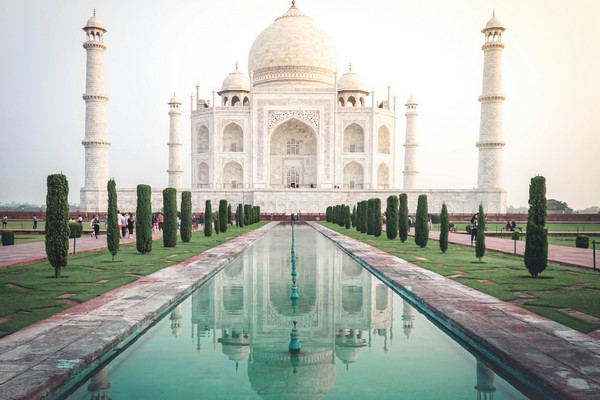
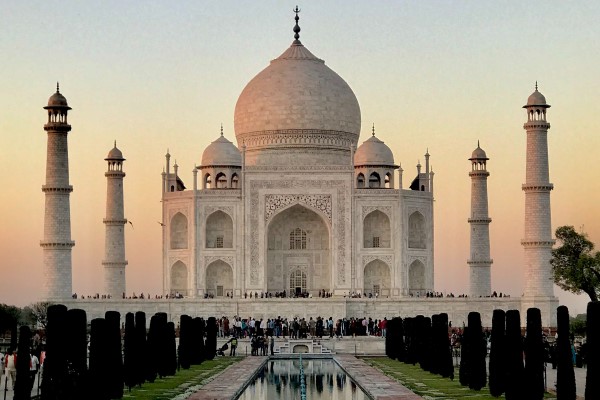
There is no other monument in the world that can match the beauty and grandeur
of Taj Mahal . Set amongst the serene ambiance of a well laid out garden the
massive marble structure of the Taj Mahal is awe-inspiring.Taj Mahal was built
in the 17th century by Shahjahan- the fifth Mughal emperor, in memory of his
beloved wife, Mumtaz Mahal. Shahjahan loved his wife so much that after she
passed away in 1631, he decided to immortalize their love in the form of the
Taj Mahal. It is more than 350 years since Taj Mahal was built, but it has not
lost itsromantic aura, which attracts millions of visitors towards it It is
because of this everlasting charm that the Taj Mahal can boast of being one
of the most popular monuments on this planet. Almost all foreign dignitaries
coming to India make it a point to visit Taj Mahal . The president of USA, Bill
Clinton has been one of the most prominent dignitaries to visit this monument
in the recent past, he said 'The world is divided between those who have seen
the Taj (Mahal) and those who have not. Very soon, I hope to be on the side
that has seen the Taj (Mahal)' was how he felt, shortly after landing in India.
Day 05: Agra - Jaipur
Drive to Jaipur visiting Fatehpur Sikri en-route.
Check-in at the hotel.

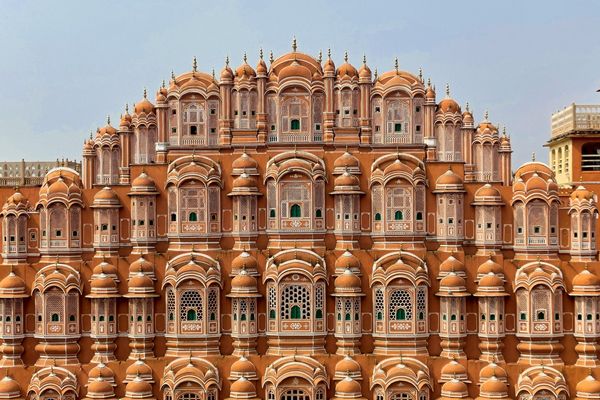
Jaipur, called the Pink city because most of its buildings are of sandstone, was chosen by Maharaja Sawai Jai Singh II (1693-1743) for his capital. It still is the vibrant capital of the desert state of Rajasthan and a major attraction for the first-time visitor.
Jaipur is surrounded on all sides by rugged hills, crowned with forts and enclosed by embattled walls. The Old City, the actual Pink City, is a great place to wander around. Maharaja Man Singh II had the whole city painted pink when the Prince of Wales, later Edward VII, visited Jaipur in 1876. Today, every home within the old city is obliged by law to maintain this facade. Fabulous, tall houses with latticed windows line the narrow streets of the old city, their rose pink colour lending enchantment to a scene which is almost magical at sunset. The city, which is very well planned, is laid out in a grid pattern.
Day 06: Jaipur
Morning visits to the Amber Fort and an elephant ride Afternoon sightseeing tour.
Day 07: Jaipur - Delhi
Drive to Delhi and transfer to the airport.
Click here for North
India Cultural Tours