Gems of India
Duration: 19 Nights / 20 Days
Destination: New Delhi – Mandhawa – Bikaner – Jaisalmer -Jodhpur – Udaipur – Pushkar – Jaipur – Ranthambhore –- Agra – Gwalior - Orchha - Khajuraho – Varanasi – New Delhi to fly back home
Day 01. Arrival in Delhi (By Flight)
Delhi the capital of india,is a historical city,which attracts the the tourists because of its historical past.This city is one of the oldest city with lots of monuments and temples that are a sight to watch. Any visitor’s visit to this city will go incomplete without a visit to these historical places.Delhi is a 1000 years old city with great market places which fancy of a lot of exquisite stuff which is worth having a glimpse of.When you arrive at the airport in Delhi,you will be received by the representatives of Nature Safari who will then take you to the hotel booked for you.
Overnight in Delhi .
Day 02. Delhi
After a relaxed breakfast start the city tour:
Morning: Visit the Old City of Delhi to see the historic Red Fort and the Jama Masjid, India’s largest mosque from the outside. See the colourful bazaar of Chandni Chowk and take a cycle rickshaw ride through the back streets of Old Delhi to get a first hand experience of the hustle and bustle of this traditional city. This ride through the small by-lanes will be most fascinating. Return to the hotel for lunch or eat at an interesting restaurant in town.
Afternoon: Visit New Delhi, seeing the Qutab Minar, a tower of victory built in the 12th century and India Gate - the war memorial. Drive past the Rashtrapathi Bhawan, the residence of the President of India, the houses of Parliament and the Government Secretariat buildings. Overnight in Delhi
Day 03. New Delhi-Mandawa
Morning proceed for Mandawa. Arrive Mandawa check into hotel. The guided tour will take you to the beautiful village of Shekhawati,town Mandawa. Walking tour of the painted 'havelis' of some of the leading business families of the country. Though they no longer live here, the local caretakers are happy to show the visitors around. Chowkhani Haveli, Gulab Rai Ladia Haveli, Lakshmi narayan Ladia Haveli, Mohahanlal Saraf Haveli and Bhag chandika Haveli are of special interest. Spend the major part of the day looking into frescoes.
Overnight stay in Mandawa.
Day 04. Mandawa-Bikaner
Early morning view the sunrise at the Desert Resort at Mandawa and then proceed for Bikaner. On arrival check into the hotel. Later in afternoon visit to a camel-breeding farm. The farm will up date you about the breeding time of camels and how they are taken care and raised in the farm. Evenings enjoy the stroll at the bustling bazaars of the city center over brimmed with handicraft and miniature paintings.
Stay in a hotel overnight.
Day 05. Bikaner- Jaisalmer
Morning city tour of Bikaner and later drive to Jaisalmer 330kms /6hrs drive. On arrival check into Hotel. Overnight at Jaisalmer.
Day 06. Jaisalmer
Morning full day city tour of Jaisalmer. Overnight at Jaisalmer.
Known as SONAR QUILA or the Golden fort, rising from the sand, the mega structure merges with the golden hues of the desert ambience and the setting suns in its most colourful shades gives it a fairy tale look. Its simply a magic, the bastions envelops a whole townships that consist of palace complex various security sources and the havelis of rich merchants carved with an incredibly light touch, several temples and the residential complexes of the armies and traders placed strategically on the trade route, from where the ancient caravans passed en-route passing all the riches for the prosperity to an otherwise non source full kingdom. These merchants served and acquire a great deal of power and noble status in the royal courts of Bhatti Rajputs who founded the state in the 12th century and proceeded further. But the rich merchant inspired by the classic style of the royals , constructed huge mansions (havelis) adjacent to each other in the nature of medieval culture and profusely decorated walls and ceilings and intricately carved outdoors and interiors. The colourful art forms and some how side kind the royal heritage and made it appear more pale in comparison. The craftsmen were usually muslims who were induced on their journey to exhibit their skills. The results was architectural purity that cannot be seen elsewhere.
Day 07. Jaisalmer- Jodhpur
After breakfast drive to Jodhpur 243kms /5hrs drive. On arrival check into hotel.
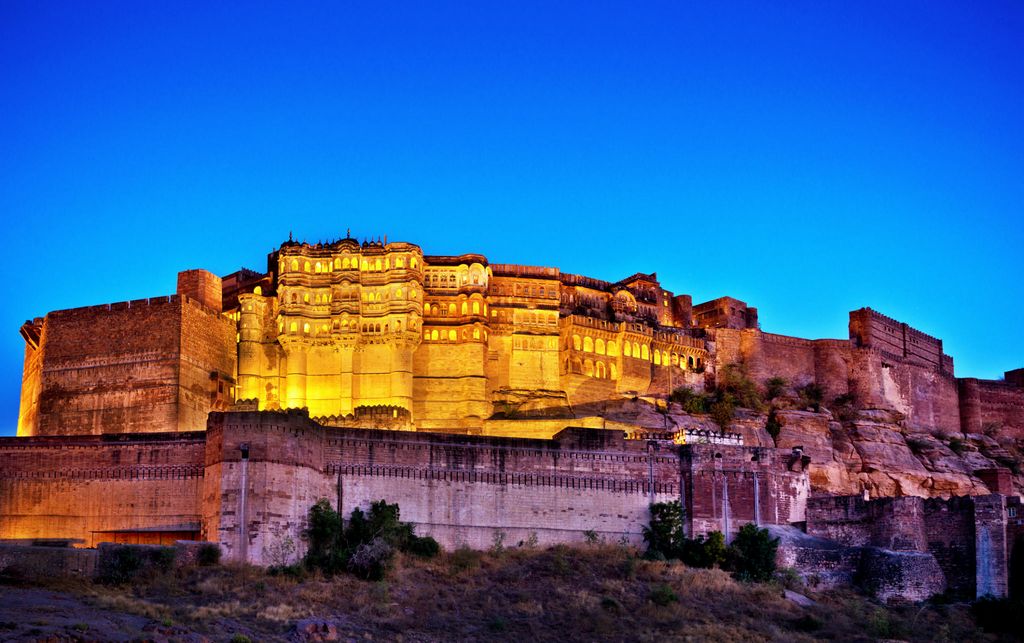
Jodhpur Famous for its magnificent forts and palaces, Jodhpur is the second largest city of Rajasthan and a major tourist attraction in the country. The city is situated at the edge of the Thar Desert with Jaisalmer on its west, Barmar, Jalor and Pali on its south, Bikaner on its north, and Nagaur on the eastern side. The city dominated by the massive Mehrangarh fort on a rocky hill is charming with its wealth of historic attractions and colourful markets which specializes in antiques. It is still one of the leading centres of wool, cattle, camels and salt.
Jodhpur was founded by the Rajput chief Rao Jodha in 1459. The city was the erstwhile capital of the Marwar state. A 10-km-long wall made of stone and built about a century after the city was founded, surrounds the old city. There are about 100 towers in the city, most of which are surrounded by defensive battlements. It was founded in 1459 A.D. by Rao Jodha-chief of the Rathore clan of Rajputs who claimed to be descendants of Rama - hero of the epic 'Ramayana'. Rahores controlled a large part of Rajasthan, especially during the reigns of Rao Udai Singh (1581 AD) and his son Raja Sur Singh ((1595), who conquered Gujarat and a good part of Deccan for the Mughal Emperor Akbar. The Rathores always had good relationships with the Mughals and Maharaja Jaswant Singh (1678) supported Shahjahan in the Mughal struggle for war of succession. Only problematic relationship they had was with Aurangzeb. After the death of Aurangzeb in 1707, Maharaja Ajit Singh became the ruler of Jodhpur. He drove out Mughals from Ajmer and added substantially to the Mehrangarh Fort.
Overnight stay in Jodhpur.
Day 08. Jodhpur –Udaipur (about 260 km/ 5 hrs)
Morning after breakfast visit the Majestic Meharangarh Fort,situated on a low sandstone hill. Within the fort, visit Moti Mahal and Phool Mahal. Also visit Bishoni village and later drive to Udaipur on arrival check into hotel. Overnight in Udaipur.
Udaipur The city of Lakes, Located in the Aravalli ranges of Rajasthan, the city of Udaipur is situated at a distance of about 405 km from the state capital Jaipur. The City of Dawn, surrounded by the ancient Aravali Mountains and set on the edge of three lakes, is a brilliant kaleidoscope of narrow lanes flanked by bright stalls, gardens, lakes, palaces and temples. The city is famous for its palaces, lake, museums, temples, and gardens and much more.
Day 09. In Udaipur
The city was founded in 1567 AD by Maharana Udai Singh on the advice of a sage. Udaipur was last of the numerous Mewar capitals. It was in Udaipur that legendary Maharana Pratap was born. He was obsessed with Chittaur and the past glories of the Sisodia clan possessed his mind. Maharana Pratap left Udaipur to win back Chittaur from the Mughals. But he failed in his attempts and Udaipur remained the capital of Mewar till India got her independence.The memory of the failure of noble Pratap gives Udaipur its pervading mood of nostalgic wistfulness.
The city acquires its scenic beauty from the Aravallis. Three lakes- Pichola, Fateh Sagar and Udai Sagar make it an oasis in the desert.
Day 10. Udaipur - Pushkar (about 260 km/ 5 hrs)
Morning has much charm for you, full day enjoyment at the famous Pushkar Fair. A fair full of festivity, merriment, games and laughter'. Enjoy some awesome photography of rich culture and tradition of Rajasthan and you will also get a change to see Rajasthani women decked out in all their traditional jewelry and colorful veils. It is just spellbinding to view camels festooned with motley of colors and ornaments participating in a camel race. Other attraction of the Pushkar is its unique accommodation in form of tents on the cool sand under the open sky, luxuriate in the bonfire with some traditional music and dances performed by the locals.
Over night at Pushkar.
Day 11. Pushkar-Jaipur (about 140 km/ 3 hrs)
Drive after breakfast to Jaipur, 140kms, about 3 hours drive.
Post Lunch start your city tour.
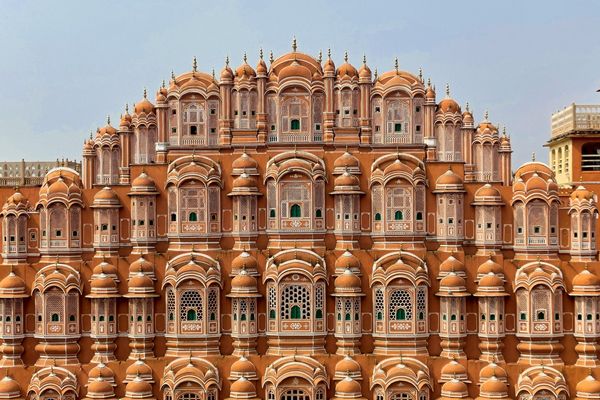
Jaipur, the vibrant capital of Rajasthan, is popularly known as the ' Pink City ' because of the pink-coloured buildings in its old city. It sits on a dry lake bed in a somewhat arid landscape, surrounded by barren hills surmounted by forts and crenellated walls. This buzzing metropolis is certainly a place of wild contrasts and a feast for the eyes. All through, Jaipur has retained its strong Rajputana flavour tempered by several influences - the mughal being the most prominent. The region's strong cultural heritage is distinctly evident even today. The city is a visitor's delight. From the intricate, delicate looking Hawa Mahal to the graphic forms of the Jantar Mantar - an open air observatory of outsized astronomical instruments, the Badi Chaupar lined with shopsand business establishments on both sides to the majestic fort-palace at Amber; from the colorful fountains of life to the sublime Birla Temple; from the architectural delight of the City Palace to the serene Jal Mahal.
Day 12. Jaipur
Morning after breakfast full day city tour of Jaipur.
Jaipur The city of Jaipur is the prime example of the culture and traditions of this region. . In this land, towering forts were built as much for ostentation as for intimidating the enemy; and desperate battles were fought by rulers who were great patrons of the arts. Among all the states of erstwhile princelyIndia, Rajputana is undoubtedly the one with the most martial record - warring factions locked in deadly warfare, thousands of royal ladies consigning themselves to flames preferring death to dishonor. The royal city of Jaipur owes its name to the founder of the city. It was Great Warrior King Sawai Jai Singh II (1693-1743) who laid the foundation of the city in 1627. He was one of the few kings of his time having a keen eye for details and a very good scientific temper. Being capital to the northern Indian state of Rajasthan, the city is mirror to every thing that Rajasthan signifies, be its culture, tradition, society, and most importantly people.
Day 13. Jaipur -Ranthambhore (about 180 km/ 4 hrs)
Morning after breakfast drive to Ranthambhore . On arrival check into hotel.
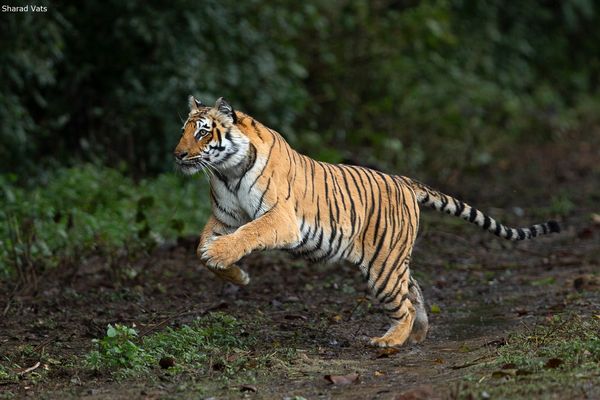
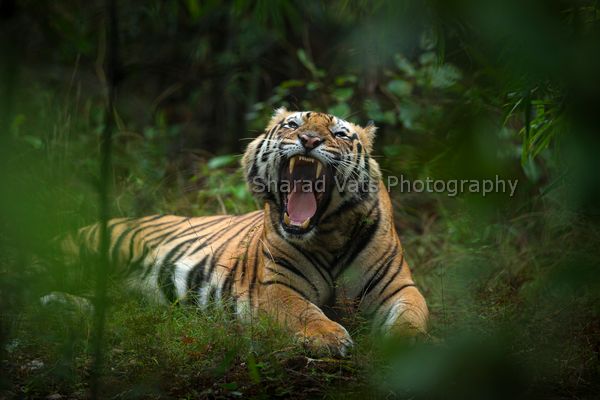
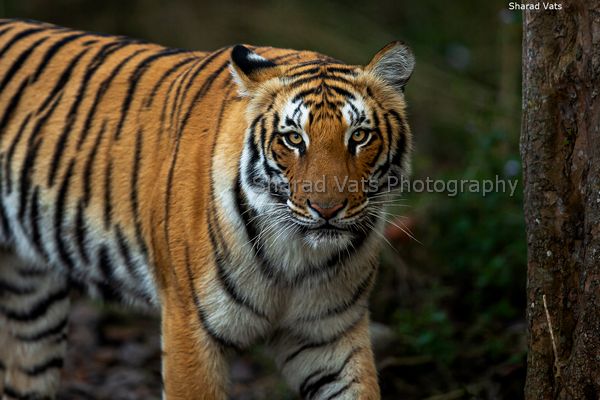
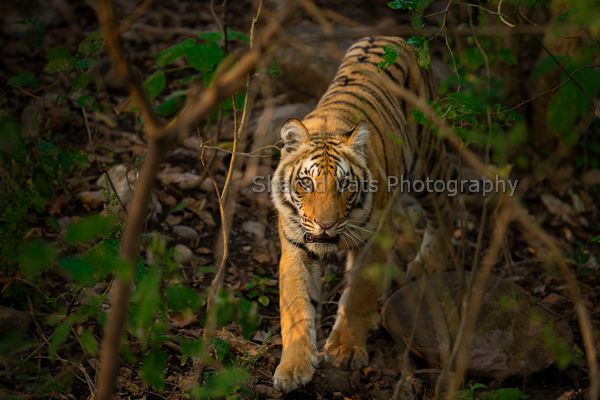
Ranthambore: With an area of 400 sq. km encompassing rocky hill crests which descend to open valleys between the Aravalli and Vindhya ranges, dotted with water pools and fruit trees, this park gets its name from the thousand year old fortress, which looms above the forest. Well known for the diurnal activity of tigers, Ranthambore is a very special and unusual area where a natural present meets a historical past. Sambar, cheetal, chinkara, nilgai and languor. The elusive leopard and tigers are found in this reserve with tourists standing a very good chance of seeing tigers during the day.
Dotted across the landscape are the crumbling ruins of its past glory, be it chatris or cupolas, like palaces or old guard posts, all of which reinforce the magical and ethereal quality of this great wilderness.
Lunch at the lodge and afternoon game drive to the national park with an English-speaking Naturalist.
Day 14 In Ranthambhore
Morning & Evening drives in the park. Breakfast, lunch and dinner at resort. Overnight in Ranthambore.During the day visit the famous Ranthambhore Fort. (12 kms. from the Resort) Perhaps the only one fort, which is not visible from a long distance. The Fort is a massive enclave and quite high. Mughal Emperor Shah Alam gifted it to Sawai Madho Singh I of Jaipur in 1754 AD and since then it was maintained as the private hunting preserve. Much later, Queen Elizabeth II and Duke of Edinburgh were part of the Royal Hunting, who stayed here too. It’s a unique Rajput Fort.
Archeological Department took it in 1964. It is 1578 ft from the sea level and 750ft from ground. Total area of the fort is about 7 miles. There is no drive way up to the fort, just the stairs. There are three big artificial lakes up in the Fort. Overnight Tiger Den Resort.
Day 15. Ranthambhore - Agra
Early morning after breakfast drive to Agra 285 kms/6hrs drive. Enroute visit Fatehpur Sikri - This exquisite city built by Akbar the Great in 1569, in red sandstone, with its forts, palaces and mosques was abandoned 14 years after its creation due to political reasons. The Diwan-i-am - a vast courtyard in which the emperor gave daily public audience; Diwan-i-khas - a large quadrangle which contained all the major functions of the Palace, Pachisi court, the Emperors private living quarter, Jodha Bhai’s Palace, Mariam’s Palace, Birbal’s Palace, Hawa Mahal and Panch Mahal are some of the important buildings of this residential complex. The Friday Mosque and the exquisite tomb of Sheik Salim Chisti are in the religious grounds set aside in a separate enclosure adjacent to the secular buildings.
Continue drive to Agra after visiting Fatehpur Sikri (49 kms). On arrival, check in to the hotel.
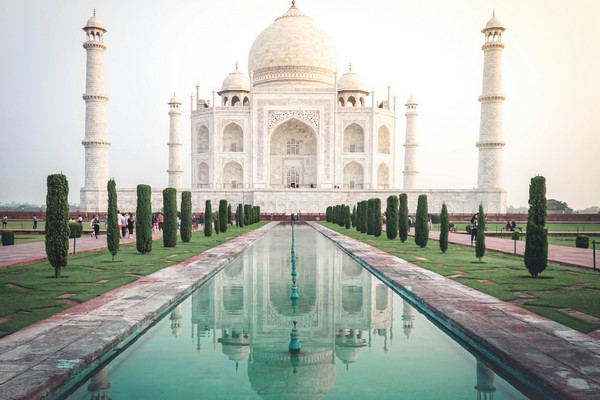
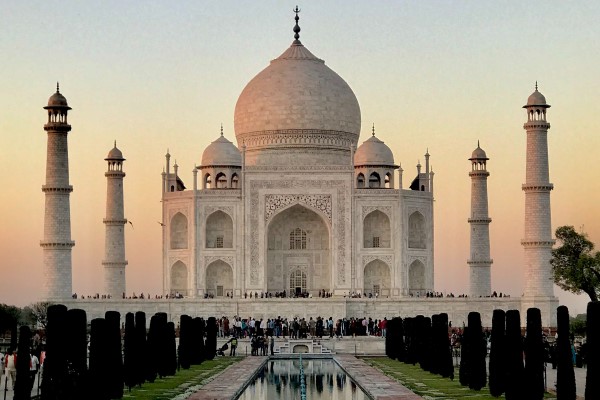
Agra is famous as the home to one of the Seven Wonders of the World - the Taj Mahal. The architectural splendour of the mausoleums, the fort and the palaces in Agra is a vivid reminder of the opulence of the legendary Mughal Empire. Agra was their capital for nearly a hundred years from 1564. A pleasant town, with a comparatively easy pace, Agra is known for its superb inlay work on marble and soapstone by artisans who are hereditary crafts persons. The city is also famous for its carpets, gold thread embroidery and leather shoes.
Overnight in Agra.
Day 16. Agra- Gwalior - Orcha
Morning sunrise visit to Taj Mahal and after breakfast drive to Gwalior 120 kms/ 3 hrs drive. On arrival visit Gwalior.
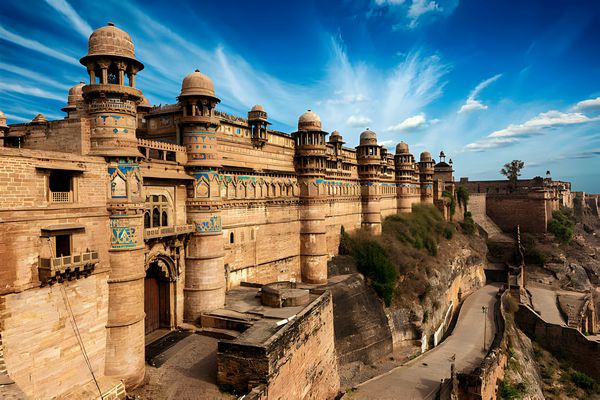
The historic city Gwalior is situated in the central Indian state of Madhya Pradesh on the main New Delhi-Mumbai and New Delhi-Chennai rail route. About 321 km from the national capital New Delhi, Gwalior is an important city of Madhya Pradesh in India. Gwalior is an old city, known for its old and massive forts. The legend says, Gwalior derives its name from a great sage Gwalipa who cured a chief of the Kachwaha clan suffering from leprosy. Today, Gwalior is one of the most developed cities of India with factories producing cotton, yarn, paint, ceramics, chemicals, and leather products. The city is also famous for many esteemed educational institutions. Gwalior Fort built in the 15th century by Raja Mansingh Tomar on a hilltop, the mighty Gwalior Fort overlooks the city. The outer wall of the fort stands two miles in length and 35 m in height.
After lunch drive to Orchha 120 kms /3hrs drive. On arrival check into Resort.
Orchha means 'hidden', it is situated 16 kms away from Jhansi, on the banks of the river Betwa in the state of Madhya Pradesh, is surrounded by charming hills and greenery. This small village was once the capital of the region ( Bundelkhand). The historical monuments of Orchha still retain their pristine charm and narrate stories of war and peace, of love and destruction.
The beauty of the town increases during evenings. Overnight at Orchha.
Day 17. Orcha – Khajuraho
Morning visit temple of Orchha. There are huge palaces and with pleasant views of the countryside from their upper levels. Orchha was established in the 16th century by the Bundela Rajput chieftain Rudra Pratap who chose this land along the Betwa river as an ideal site for his capital. Raja Bir Singh Ju Deo one of the succeeding rulers built the elegant Jehangir Mahal, a tiered palace crowned by graceful chhattries. This provides some very exotic views. Orchha is now an abandoned land but not forgotten. The enchanting exteriors and interiors are decorated by beautiful Bundela school of painting Orchha is a photographer's delight with architectural gems abounding this town. Beautiful Monuments in this region are not bare stone but have a plastering on them.
Later drive to Khajuraho (175 kms/4hrs)
Khajuraho discovered by chance, India's second biggest single tourist attraction, Khajuraho has the largest group of medieval temples that are adorned with numerous sculptures of extraordinary grace and delicacy celebrating the stylized and refined courtly accomplishments of beauty, love and creative arts. Once the religious capital of the Chandela Rajputs, the temples of the city date from 950-1050 AD. A wall with eight gates encloses the entire area and two golden palm trees flank each of them. Originally, there were over 80 temples, of which only 22 now can be said remarkably preserved. The set of temples at Khajuraho celebrating Hindu religious thought in its mystifying variety of scope and inclusion stands distinguished from rest of the Hindu temples. The temples highlight the existential ethos in religion that venerates 'Yoga' and 'Bhoga'. 'Yoga' is union of the self with the Almighty, while 'Bhoga' is the path to God through physical pleasure. The temples at Khajuraho, dedicated to physical love and pleasure are a testimony to this philosophy. Declared a World Heritage Site in 1986, Khajuraho is a prominent, must-see destination and its temples are India's unique gift to the world as they capture life in every form and mood in stone.
Temples of Khajuraho
Conforming to the central Indian style of temple architecture, the temples of Khajuraho are adorned with explicit erotic sculptures with utmost architectural harmony and beauty. Built within a 200-year span, the temples plan, from the simplest to the most inspiring, follow the same pattern and all of them are ornately carved. The temples of Khajuraho are divided into three groups - the Western group, the Eastern group, and the Southern group. The largest and most easily accessible is the Western group.
1. The Eastern Group, which encompasses five detached sub-groups in and around the present village of Khajuraho. It includes three Brahmanical temples known as Brahma, Vamana and Javari and three Jain temples, the Ghantai, Adinath and Parsvanath. Overnight in Khajuraho.
Day 18. Khajuraho –Varanasi
Morning : visit the Eastern and Southern group of temples. The Parsvanath temple of the Eastern group is the group’s largest Jain temple. The themes depict, in charming detail, everyday activity. Also visit the Duladeo temple dedicated to Shiva and the Chaturbhuj temple of the Southern group.
Afternoon transfer to the airport to board the flight for Varanasi. Leave Khajuraho for Varanasi by 9W: 724 ( 1405 / 1445 hrs ) Meeting and assistance on arrival at Varanasi airport and transfer to the hotel. On arrival, check-in to the Hotel.
Varanasi is one of India’s most important pilgrimage sites and the holiest of holy cities for Hindus. Known also as Kashi and Benaras, Varanasi is one of the world’s oldest living cities, and has been a centre of learning and culture for well over 2000 years.
Evening : Visit the “Ghats” or bank of the Ganga River. This is a fascinating walk as you can experience the cultural ethos that guides the life of the pious. See the rituals that take place to the setting sum and the ablutions that are performed in the river. As boats float down-stream, some carrying goods, fruits and vegetables, you will see others carrying the pious who perform ceremonies along the river. On the banks or “ghats”, you can see some absorbed in prayer and the chanting of hymns, and others engaged in commerce and yet others performing functions like hair-cutting, massaging and even cleaning ears! Walk across to the Manikarnika Ghat, where you can see cremation, performed with intense ritual - the process of sending the departed soul to the heavens. Hindus believe that the gateway to the Heavens and for the Re-incarnation of the Soul `in a better state’, is possible when life’s last journey is from Varanasi.
Overnight in Varanasi.
Day 19. Varanasi – New Delhi (By flight)
Early morning : Take a boat ride at dawn down India's most sacred river, The Ganges. Sun rise at the holy river is a truly tranquil and breath taking sight with pilgrims standing waist-deep in water, praying to the rising Sun. Past these bathing ghats, see the "burning ghats" where the Hindus cremate their dead. This is done with great religious fervour which makes for a moving experience. On your return walk through the streets of the old city. See the famous Vishwanath temple with its spires covered with gold, dedicated to Shiva, the presiding deity of the city. Return to the hotel for Breakfast.
Late morning: Visit the Benaras Hindu University founded in 1916 and its famous Museum - Bharat Kala Bhavan which houses one of the finest collections of Mughal miniature paintings and brocade textiles. The Bharat Mata and Durga Temple.
Later transfer to airport to board a flight to New Delhi 1440 hrs. Ariive New Delhi at 1600 hrs and overnight at New Delhi.
Day 20. New to Fly Back Home
Afternoon board a flight to mumbai . On Arrival transfer to International Airport to Board Flight Back Home.
Click here
for Gems of India