Tribal Tour of India
Duration : 16 Nights / 17 Days
Places to See : Delhi - Nagpur - Kanha - Kawardha
- Kanker - Bastar - Jeypore - Rayagada - Kakariguma - Gopalpur - Bhubaneswar
- Konarak - Puri - Kolkata
The Soul of India lies along the eastern seaboard of India, with fertile green
coastal plains rising to the lush green hills of the Eastern Ghats. Orissa has
around 62 distinct tribal groups of aboriginal people. Most prominent and interesting
among them are the Saora, Kondh, Gadabba, Paraja, Bonda and Koyas of Orissa
region, and the Maria tribes The Soul of India lies along the eastern seaboard
of India, with fertile green coastal plains rising to the lush green hills of
the Eastern Ghats. Orissa has around 62 distinct tribal groups of aboriginal
people. Most prominent and interesting among them are the Saora, Kondh, Gadabba,
Paraja, Bonda and Koyas of Orissa region, and the Maria tribes of Bastar districts
in Chattisgarh State. Weekly “market days”, when the local tribal
people come to buy goods, give you the perfect opportunity to see the various
tribes close at hand. You will meet people with distinct features, and decorated
with facial and hand tattoos, layers of beads covering bare breasts, piles of
aluminium necklaces and a multitude of earrings.
Day
1 : Arrive Delhi
You will be met upon arrival at the arrival lounge of International airport
and will be transferred to hotel Imperial for overnight stay.
Day 2 : Arrive Nagpur and drive to Kanha
Depart Delhi on flight 9W111 at 0705 hrs, arriving in Nagpur at 0825 hrs. You
will be met and assisted on arrival and drive to Kanha. Upon arrival proceed
to Kipling Camp.( 6 hours drive).
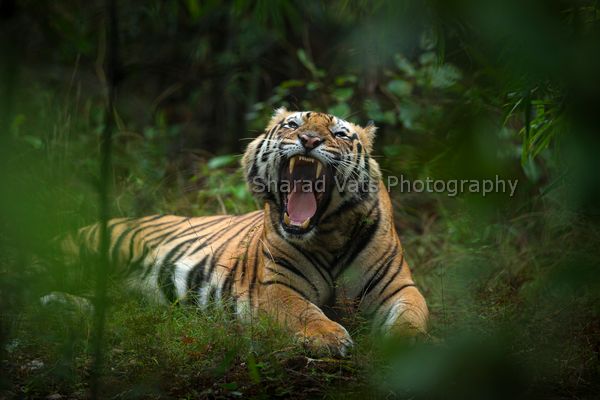
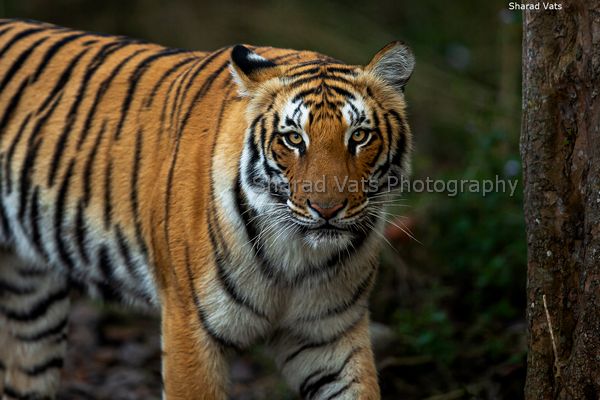
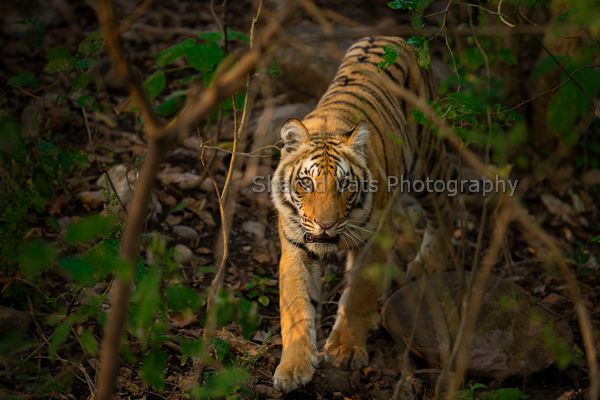
Considered by some to be India's greatest national park, the area is certainly
an excellent place to see many species in their natural habitat. First declared
as a small sanctuary in 1933, it was upgraded to a national park from 1955.
One of India’s great conservation success stories is from Kahn, where
the barasingha (swamp deer) population was increased from about 66 in the
late 1960s to over 450 by 1985. The terrain consists of attractive forest
with bamboo brakes, grassy plateaus and meadows in the valleys. The varied
habitat is also home to the gaur (largest of the world's cattle), sambar (the
largest of the Indian deer), chowsingha (the only four-horned antelope in
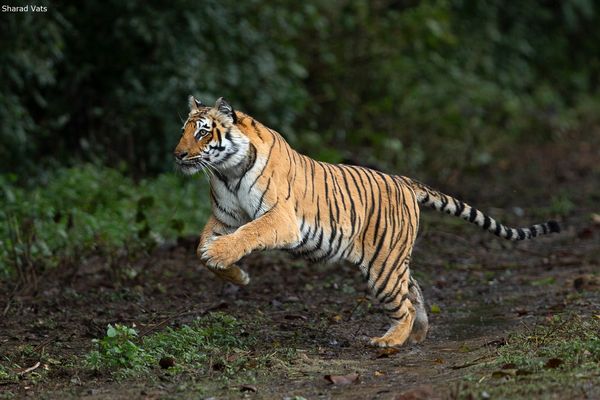
the world), Nilgai (blue bull), sloth bear, leopard, tiger and a wide variety
of birds.
Overnight at Kipling Camp.
Day 3 Drive Kanha to Kawardha
After an early morning safari in the park, depart on the 95 km( 3- 4 hours)
drive to Kawardha, a small town in the Chhattisgarh (“34 forts”)
region. Kawardha, which is in the centre of the Bagia tribe who live on the
forests surrounding the town. In this remote area, Maharaja Vishwaraj Singh
has recently opened his palace to visitors. The palace provides a delightfully
quiet unspoiled contrast with India’s big cities. The Radha Krishna
family temple with underground rooms, the Holy Water tank and other 11th century
temples in the immediate region are also worth visiting.
Overnight at Kawardha Palace.
Day
4 Drive to Kanker (250 kms 6 hours):
As one leaves the plains of Chattisgarh, driving southwards, there is a gentle
but unmistakable ascent into the hills. The forest thickens all around as
the road winds up serpentine Ghats. The hills in the distance, bathed in a
misty blue, appear to fade into each other. Somewhere along the way, in a
clearing on the side, men with poles slung over their shoulders and women
with baskets on their heads, make their way down a forest track in single
file, unmindful of the occasional vehicle going past. The air is fresh and
sweet with the fragrance of wild flowers. There is an exhilarating sense of
coming into something wondrous, beautiful and untouched. A visit to this region
provides a rare opportunity to experience this moment and the heritage that
lives on in ingenious ways.
Nestled in the bend of the river Dudh, a tributary of the Mahanadi, and framed
by an arc hill, the picturesque town of Kanker quietly watches over the routes
that lead into the interior. Today a district headquarters with a population
of 30,000 Kanker boasts a royal heritage dating back to the 12th century A.D.
The tribal districts of Kanker and Bastar straddle central India’s eastern
uplands and plateau, and are covered with one of its richest stretches of
tropical forests. Since time immemorial, these have been home to a pristine
world of tribal communities that have created and sustained delicate rhythms
of life in harmony with diverse flora and fauna.
On arrival in Kanker, you will be received at the Kanker Palace Hotel with
a traditional welcome and then shown to your room. Once refreshed, Chattisgarh
folk musicians will entertain the guests over beverages and pre-dinner snacks.
Members of the Royal Family may join you to share their insights into the
life of the region.
Overnight at Kanker Palace.
Day 5 : In Kanker
After breakfast, depart for an excursion to Keshkal, 30 kms south of Kanker,
amidst dense forest. The road climbs a spectacular series of ledges in 12
loops. At the summit are two picture-perfect rest houses, which offer an array
of breathtaking views of the lush expanse of jungle and the interlocking valleys
below. Later you will have the opportunity to observe and enjoy tribal life
at close quarters when you visit the tribes in the vicinity. You will also
visit the ruins of some ancient temples in the area.
Return to Kanker for dinner and overnight stay.
Day 6 : In Kanker
After breakfast, enjoy a full-day excursion to visit the tribal village of
Bahaigaon, famous for its dancers. The countryside around Kanker is an endless
series of interesting discoveries. Gond Muria and Gond Halba tribals live
in hamlets and villages, following unhurried routines and customs that are
an anthropologist’s delight.
Return to Kanker for dinner and overnight stay.
Day
7 : Drive to Bastar (3 hours)
After breakfast, depart for Bastar. The journey is, in itself, a treasure trove
of vignettes of tribal life. You may visit the centres of tribal craft and their
emporia at Bastar and Kondagaon on the way and you will have the opportunity
to mingle with tribal folk.
On arrival, check into a Bastar farm house for dinner and overnight stay.
Day 8 : In Bastar
Enjoy a visit to the Maria Gond tribe, known for their weaving, dancing and
hospitality. Also spend time in Bastar, soaking in the natural beauty of the
region amidst which tribal folk create their lives. The stupendous falls of
the river Indravati at Chitrakote, and the lively cataracts of Tirathgarh
offer exciting prospects of exploration and a picnic.
Dinner and overnight at a Bastar farm house
Day 9 : Drive to Jeypore
After breakfast, depart for Jeypore, en route visiting Kotpad weavers and
tribal villages. Orissa is a world of lush and green mountains, with rich
paddies and terraces everywhere. Jeypore, in the Koraput district of Orissa,
is a feast for the eyes, cradled in virgin nature with a broad panorama of
enchanting hills, rippling streams, spectacular waterfalls, wonderful caves
and lush green valleys.
The scenery is complimented by the simplicity and traditional hospitality
of the tribes and their rich cultural heritage. You will meet a few of the
62 tribal groups that inhabit this State; in particular the very colourful
and unusual Kondh, Gadabba and famed Bonda tribe, whose animist societies
are totally separate from, and in great contrast to, the traditional Hindu
societies found all over India.
As we explore weekly markets, be prepared to meet people decorated with facial
and hand tattoos, layers of beads covering bare breasts, piles of aluminium
necklaces and a multitude of earrings, whose features are far from Asian.
On arrival, check into Hotel Hello Jeypore for dinner and overnight stay.
Day 10 : In Jeypore (This should be a Sunday or Thursday)
After breakfast, take a full day’s visit to Onukudelli to see the famed
Bonda tribe and their weekly market on the hilly main street of this tiny
town. The Bonda, named after the Bonda Hills of Orissa’s interior, are
also known as “the naked people”. They have been described as
the wildest, rudest and possibly the most interesting tribe and are renowned
for their stubborn, independent and often ferocious spirit. They are generally
agriculturists and expert cultivators, and their weapon is bow and arrow,
by which they defend themselves from wild animals.
Also visit the Gadabba tribe of Austro origin at Lamptaput. Early settlers,
they trace their origins to the time of the Ramayana. They are one of the
most colourful and primitive tribes of Orissa with their own language, Gutab.
The women wear a long strip of cloth tied around the waist and a second piece
of cloth is worn across the breasts and tied over one shoulder. They also
adorn themselves with a number of ornaments, including necklaces, earrings,
nose rings and large silver hoops in their hair. Older Gadabba women also
wear two very thick silver neck rings, which are not removed until they die.
Gadabba men wear loin cloths.
Return to Jeypore for dinner and overnight stay.
Day 11: Drive to Rayagada
Depart for Rayagada, en route visiting the Paraja tribe and their village
and tribal market at Kakariguma.
On arrival in Rayagada, check into the Sai International Hotel for overnight
stay.
Day 12: Drive to Gopalpur
Depart for Gopalpur on sea, en route visiting the Kondh and Saora tribe,
their villages and lifestyles. The Kondhs are historically known for their
“Mariah Sacrifice” – or “Human Sacrifice”. They
are of Dravidian origin and speak Kui language, and they practice elaborate
birth, marriage and death rituals. The Saora tribes are mostly concentrated
in the Ganjam district of the State. The whole area is an intricate labyrinth
of precipitous hills and valleys which are part of the Eastern Ghat - the
height of the hills varying from 2000 to 4000 feet above sea level. The tribes
trace their origins to the Ramayana where there is reference to Savari, a
Saora woman whom Ram and Laxman met while moving about in the Dandaka forests
in search of Sita.
On arrival in Gopalpur on sea, check in to the Song of the Sea or Sea Pearl
Hotel.
Day
13 : Drive to Bhubaneswar
Depart for Bhubaneswar en route visiting Chilka Lake- the largest brackish
water lake in the country, spread over 1200 sq. kms and famous for its migratory
birds and Irawaddy dolphins.
Enjoy a cruise for 2 hours on the lake where you will see the migratory birds,
Kalijhai island temple and local fishermen.
Continue your drive to Bhubaneswar and on arrival check into the Oberoi Trident
Hotel for dinner and overnight stay.
Day 14 : In Bhubaneswar
After breakfast, depart for a full day visit of Konarak and Puri –
en route visiting the famous, traditional, artistic appliqué village
paintings.
The temple chariot of the Sun God on the sands of the Bay of Bengal is a 13th
century architectural marvel. It is designed as a celestial chariot of the Sun
God, complete with twelve pairs of wheels and seven horses. This legendary temple
has sculptures of great beauty covering all aspects of life. It is most famous
for its erotic art.
Lunch at the Mayfair Restaurant.
Puri - the city by the sea - is a major pilgrimage centre in India. Adi Shankara
founded one of the peethas here. The fame of Puri emanates mostly from the
12th century Jagannath Temple, which is known for its annual Car Festival
and contributed the word “Juggernaut” to the English language.
Puri is also famous for its golden beach, ideal for swimming and surfing.
Return to Bhubaneswar for dinner and overnight stay.
Day
15 : In Bhubaneshwar
After breakfast, enjoy a full day’s trip to visit the famed Buddhist
Heritage complex -Ratnagiri, Udayagiri and Lalitagiri, located 110 kms and
2 hours drive from Bhubaneswar. Through the years, from the 3rd century B.C,
Orissa had nurtured a number of Buddhist centres of learning and art in several
places which flourished up to the 12th to 13th century A.D. In fact, these
places of Buddhist interest had been a great source of attraction to outside
visitors from as early as the 7th century, when the famous Chinese traveller
Hiuen Tsang had visited the Buddhist centres in Orissa. Lalitagiri, Udayagiri
and Ratnagiri, on the banks of the river Birupa, is the most opulent Buddhist
site, with vestiges of rich sculptural art of both Mahayanic and Vajrayanic
pantheon. In addition these places have beautifully laid out Buddhist viharas,
stupas and chaityas.
Enjoy a packed lunch, from your Hotel, during the day.
Return to Bhubaneswar for dinner and overnight stay at the Oberoi Trident
Hotel.
Day 16 : In Bhubaneswar
Enjoy a sightseeing tour of Bhubaneswar, capital city of the modern state
of Orissa and the ancient Kingdom of Kalinga. Bhubaneswar is known as the
Temple City of India. Amongst the finest of its 600 temples, and also the
largest, is the Lingaraj Temple of Shiva built in the 11th century. Visit
the Mukteswara temple built in the 10th century and known for its stone and
arch at the entrance and its rich sculpture. With tales from the Panchtantra
carved on it, the temple is a magnificent example of Orissan architecture.
The Rajarani temple, set in picturesque surroundings, is noted for its intricate
carvings of floral, animal and human figures. It was built in the 11th century
and has no deity. Parasurameswara temple, a small but richly decorated shrine
of Shiva built in the 7th century, is one of the best preserved. It has sculptures
featuring amorous couples, animals and floral motifs.
Visit the caves carved out of rock on the hills of Khandagiri and Udayagiri,
which are about 8 kms from the city. The double storied Rani Gumpha–Queen’s
cave is the largest cave with ornate carvings. The Hati Gumpha-elephant cave
has the chronicles of King Kharvela carved on it.
Proceed to the Airport to board your flight S2316 to Kolkata.
You will be met upon arrival and transferred to the Oberoi Grand Hotel for
dinner and overnight stay.
Day
17: In Kolkata
A mere village in the 17th century, Kolkata today is one of the largest cities
in the world, one of the largest ports in the East and the main outlet for
produce of West Bengal and neighbouring states. The city was built around
Fort William, with a huge Maidan surrounding it. The main building on the
Maidan is the Victoria Memorial, a massive domed building of white marble
which houses a collection of Victorian memorabilia, as well as objects and
documents related to the history of Bengal. In the park are statues of Queen
Victoria, Lord Curzon and other figures of the British Raj. The Race Course,
opened in 1819, is the largest in the East. In its central oval are the Calcutta
Polo Club grounds where the game has been played since 1861. Rabindra Sadan,
a concert hall named after Rabindranath Tagore is active all year round. The
Academy of Fine Arts has a collection of old textiles, miniatures, Mughal
swords, Tagore memorabilia and modern Bengali art. St. Paul's Cathedral, a
tall white Gothic building with a stained-glass window by Burne-Jones, was
consecrated in 1847. Near the Cathedral are the Birla Planetarium and the
Nehru Children's Museum, which displays a collection of toys from all over
the world and two remarkable dioramas presenting the Ramayana and the Mahabharata
in 61 scenes. Chowringhee, once a jungle path leading to the Kali temple and
the Esplanade, symbolise Calcutta's past grandeur with late 19th century buildings.
Raj Bhavan (Government House) was built in 1803. Towards the river are the
Assembly House, the old Town Hall and the High Court built in 1872 on the
model of the Gothic belfry of Ypres in Flanders. St. John's Church, built
in 1784, is reputed to have the best organ in India. In its garden stands
a monument to the victims of the 'Black Hole' tragedy. Writers Building, built
in the late 19th century, is today the seat of the West Bengal Government.
The present General Post Office is located on the site of the first Fort William
and a plaque near the main entrance marks the location of the 'Black Hole
of Calcutta'.
Overnight at the Oberoi Grand Hotel.
In the evening you will be transferred to the International airport to board
your onward flight.
End of Services
Tribal Tour of India Reservation Form