Ladakh Tours India Classic Journeys
Ladakh  Monastry Tours
India Journey - Welcome to India, the land of cultural & natural variations.
We offer you exotic travel packages to explore india, our cultural travel packages,
adventure tour itineraries, religious& pilgrimage tours to india
          Home  About Us    Contact Us    Reservation    E-Mail    Traveler's Tools
Cultural Journey
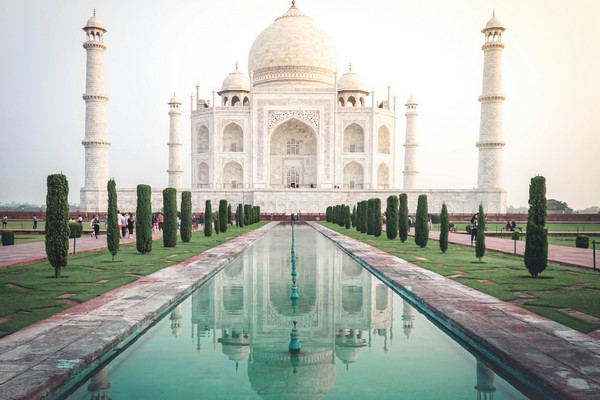
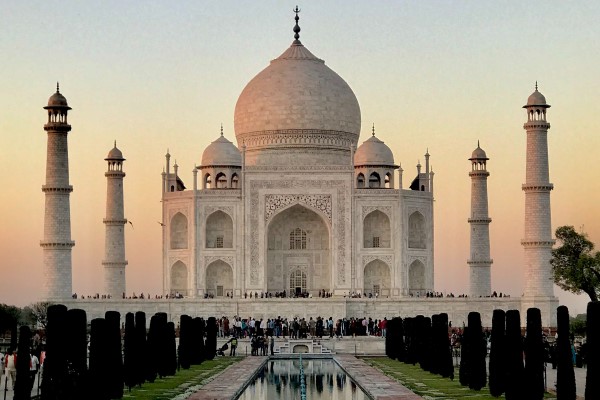
Taj Mahal, Agra Travel
- Agra Travel
- Kerala Travel
- Ladakh Travel
- North India Travel
- Rajasthan Travel
- South India Travel
- Rajasthan Places
Plan Your Journey
Backwater, Kerala Tour
- Tour to Kerala
- Tour to Ladakh
- Tour to South India
- Tour to North India
- Tour to Rajasthan
Wildlife Safari Adventure Journey
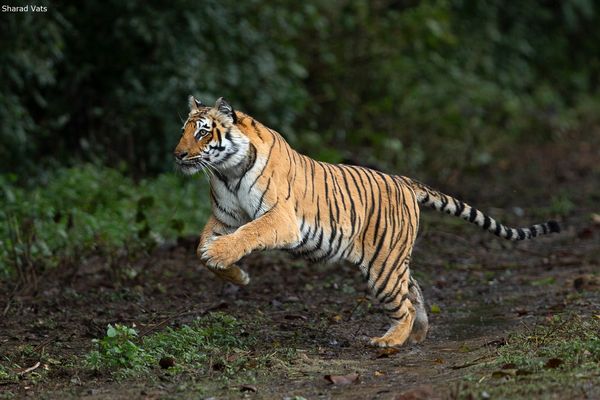
Tigers, Wildlife Safari Adventure Tour
- Safari Adventure Tour
- Wildlife Tours
- Wildlife Parks India
Luxury Train Journey
Luxury Train Tour
- Palace on Wheels Luxury Train
- Deccan Odyssey Luxury Train
The Best of Classic Journey
Ladakh Tour
- Ladakh Cultural Tour
- Orissa Tribes & Nature Tour
- Rajasthan India Tour
- Tiger Photographic safari
- Birding Tour of North India
- North India Cultural Tours
- Classical South India Tour
- Rajasthan Heritage Trip
- Sikkim & Bhutan Tour
- Ganges Boat Tour
- Tribal Tour of India
- Indian Village Tour
Budget Tours in India
Khajuraho Tour
- Golden Triangle Tour
- Great Taj Mahal Tour
- India Nepal Tour
- Khajuraho Temple Tour
- Budget Wildlife Tours
- Splendid Gujarat Tour
- East India Cultural Tour
- Buddha Tour
- Central India Heritage Tour
- Ladakh Tribal Tour
- Tamilnadu Tour
Spa Ayurveda & Rejuvination
- Spa Resort in India
- Kerala Spa Resorts
 
Lake Pichola, Classic Journey
 
"Without knowing it, we utilize hundreds of products each day that owe their origin to wild animals and plants. Indeed our welfare is intimately tied up with the welfare of wildlife.Wellmayconservationists proclaim that by saving the lives of wild species, we may be saving our own."- Norman Myers, A Wealth of Wild Species
----------------------------------------
"I am pessimistic about the human race Because it is too ingenious for its own good. Our approach to nature is to beat it into submission. We would stand a better chance of survival if We accommodated ourselves to this planet And viewed it appreciatively instead of Skeptically and dictatorially".
- E.B. White
----------------------------------------


Ladakh Tours

Ladakh Trekking Tour

Duration: 14 Nights / 15 Days
Destinations: Delhi - Leh - Lamayuru - Alchi - Leh - Hemis - Hike Sabu - Stakmo Village - Hike Stakna Monestary - Matho Village - Leh - Delhi - Corbett - Delhi

Red Fort, Delhi TourismDay 01: Arrive Delhi: Meeting, assistance on arrival  at the arrival lounge of Indira Gandhi International airport and transfer to the hotel Ashok Country Resort for overnight stay.

Day 02: Fly Delhi to Leh: Early morning pick up from your hotel to the domestic airport to connect your flight 9W609 departs at 0600 hours and arrive Leh at 0715 hours. Assistance on arrival at the Leh airport, and transfer to the City Hotel . Day for acclimatization, and overnight at the Local City Hotel .

Day03: In  Leh: After breakfast visit Stok palace. The palace houses a fine private museum, which is open to the public when the Rani (queen) of Stok is in residence. There is a superb collection of thangkhas, said to be the best in the world. Some of them have been worked in pure gold and paints made of crushed semi-precious stones. Also of interest are antique robes and royal jewelry, specially noted for its turquoise and red coral. The collection also includes artillery and animal skins. Stok Gompa is a subsidiary of Spitok and the same lama, Nawang Lotus founded both, during the reign of King Takpa Bumlde. Stok belongs to the yellow-hat sect of Buddhism and currently has about 20 lamas living there. The oldest parts of the gompa are some 550 years old though the Dukhang or main assembly hall is only about 50 years old.

In the afternoon visit Leh, a fascinating labyrinth of winding streets and quaint bazaars. The main street is open and airy, with rows of shops on either side. On either side of the market are seen a long line of Ladakhi women in traditional dress and colourful jewelry of coral and turquoise, seated behind enormous baskets, selling vegetables. The spectacular eight-storey Leh Palace looming above, overlooking the town, was built in the 16th century, about the same time as the Potala in Lhasa which it resembles.

The stroll through the town is followed by a visit to Sankar gompa, about 2 km from the market. It has a number of pure gold icons and richly painted walls, its pictures depicting different stories, including some from the Panchtantra. Return to the Hotel for dinner and overnight stay.

Buddhist Monk of Leh, Leh Tour PackagesDay 04: DRIVE LEH to LAMAYURUand Overnight at ALCHI: Lamayuru Gompa lies 15 km east of the Fatu La on the Srinagar-Leh Highway, with its medieval village seemingly growing out of the rocky hillside below it. In the past, Lamayuru has housed up to 400 lamas, but presently there are only 30 to 50 lamas living here, although about 150 lamas belong to the gompa. The other lamas stay and teach at Lamayuru's smaller daughter gompas located in outlying villages. Twice a year, all the lamas gather at the gompa for general prayers, accompanied by three days of masked dancing. These gatherings occur in the second and fifth months of the Tibetan calendar (usually March and July). Lamayuru belongs to the red-hat sect of Buddhism.  Ancient legends say that at the time of Sakyamuni (the Historical Buddha), Lamayuru's valley was a clear lake where nagas (holy serpents) lived. The Bodhisattva Madhyantaka foretold that the lake would be emptied and a monastery built there. The legends continue by saying that Naropa, an 11th century Indian Buddhist scholar, came to Lamayuru and spent many years meditating in a cave, which can still be seen in the main Dukhang or assembly hall. Naropa then caused a split in the surrounding hillside and the lake emptied through this opening. After the lake emptied, Naropa found a dead lion previously covered by the waters of the lake. On this spot, Naropa built the first temple at Lamayuru, the Singhe Ghang (Lion Mound). Other historical accounts relate that in the 10th century the King of Ladakh ordered the building of Lamayuru gompa and placed it under the supervision of Rinchen Zangbo. The original gompa was composed of five buildings although only the central one still stands. In the 16th century, Ladakh's King Jamyang Namgyal was cured of leprosy by a lama from Tibet. In gratitude, the King gave Lamayuru gompa to this lama and also bestowed other privileges - no taxes were collected and the area surround the gompa was declared a sanctuary where none could be arrested. For this reason, Ladakhis still refer to Lamayuru as Tharpa Ling, the "Place of Freedom".

After visiting monestary drive to Alchi for overnight stay.

Sightseeing of Lake, Leh Travel PackagesAlchi Gompa is located near the small village of Saspol. It is one of the earliest monasteries built in Ladakh, dating from the 11th century. Because it was built before the invading wars began in the 15th century, Alchi was built on lowlands, rather than on a hilltop as others were, in order to protect them from marauding armies. It was erected by King Rin-chen-Izghimpo, one of the first Ladakhi kings to engage in foreign relations. To build the monastery, the Ladakhi king signed a treaty with the Gyalpo (king) of Tibet, who agreed to provide the artisans. The rambling monastery has six main buildings: the Dukhang or main assembly hall, the Sum-tsek or three-tiered temple; the adjoining Manjusri Lha-khang and Lotsawa Lha-khang temples; the Lha-khang Soma or "New" temple and the Kanjur-Lha-khang, which is closed to the public. Walking towards the gompa from the small group of houses nearby, the first temple of importance is the Sum-stek temple, the oldest of the Alchi gompa. The temple is surrounded by wooden pillars and carved woodwork of mythological animals.  The woodwork is original and reflects Kashmiri influence. The Dukhang is the place where the lamas gather for religious ceremonies. Inscriptions on the Dukhang's back wall attribute its building to the religious devotion and financial generosity of a man named Kal-Idan Shes-rab. The walls along both sides of the Dukhang are covered by mural paintings which are probably original to the time of the monastery's founding. Of particular interest are the miniature scenes of royal life. The best preserved is the royal drinking scene which is one of the most remarkable to have survived anywhere in the Tibetan-speaking world. The costumes in this scene clearly depict central Asian dress and the king and queen each have a halo, a convention that appears elsewhere in Alchi and possibly shows Nestorian Christian influence from Persia. This is the only painting in Ladakh that shows central Asian influence so clearly. The chortens around Alchi gompa also contain numerous wall murals, often of Rin-chen bZang-po, meant to honour his activities as a translator in collaboration with Indian teachers of Buddhism.

Rizong Gompa is in a truly beautiful mountain setting but visiting it will take a little determination as this gompa is the only one in Ladakh without a road reaching it. About 26 km east of Khalsi and 9 km west of Saspol on the Srinagar-Leh Highway is the small settlement of Uletokpo. Two hundred metres west of the settlement is a road that branches off to the north, ending some 3 km away. The path directly in front of the roadhead leads to the buildings of Chomoling,a nunnery set in the midst of a lovely apricot grove and part of the Rizong gompa. The area around Chomoling is called Julichen meaning many (chen) apricot trees (juli). Chomoling itself does not have any temples as the chomos (nuns) worship at the temples in Rizong gompa. The chomos also work all the fields belonging to Rizong, take care of the animals and make the butter needed by the lamas both for their butter tea and for the butter lamps lit in the temples. The chomos believe that by selflessly serving others, instead of themselves, they are serving Buddhism. Keeping the nunnery's buildings on the left, walk on a clearly marked path for a few more mintues. At a fork marked by a tall prayer flag pole, turn left. Walk on this trail for about 30 minutes through arid gorges that produce a beautiful effect of solitude and serenity. After one last curve, Rizong gompa will suddenly appear, set between two barren rock walls.  Rizong is a relatively new monastery, founded in 1829 by Tshul-khrims Nyi-ma and presently has about 30 lamas attached to it. It also has the reputation of being the best disciplined monastery in Ladakh.


Jeep Safari, Leh Adventures TourDay 05: DRIVE ALCHI TO LEH: Afterbreakfast visit Alchi Gompa is located near the small village of Saspol. It is one of the earliest monasteries built in Ladakh, dating from the 11th century. Because it was built before the invading wars began in the 15th century, Alchi was built on lowlands, rather than on a hilltop as others were, in order to protect them from marauding armies. King Rin-chen-Izghimpo, one of the first Ladakhi kings to engage in foreign relations, erected it. To build the monastery, the Ladakhi king signed a treaty with the Gyalpo (king) of Tibet, who agreed to provide the artisans. The rambling monastery has six main buildings: the Dukhang or main assembly hall, the Sum-tsek or three-tiered temple; the adjoining Manjusri Lha-khang and Lotsawa Lha-khang temples; the Lha-khang Soma or "New" temple and the Kanjur-Lha-khang, which is closed to the public. Walking towards the gompa from the small group of houses nearby, the first temple of importance is the Sum-stek temple, the oldest of the Alchi gompa. The temple is surrounded by wooden pillars and carved woodwork of mythological animals.  The woodwork is original and reflects Kashmiri influence. The Dukhang is the place where the lamas gather for religious ceremonies. Inscriptions on the Dukhang's back wall attribute its building to the religious devotion and financial generosity of a man named Kal-Idan Shes-rab. The walls along both sides of the Dukhang are covered by mural paintings which are probably original to the time of the monastery's founding. Of particular interest are the miniature scenes of royal life. The best preserved is the royal drinking scene which is one of the most remarkable to have survived anywhere in the Tibetan-speaking world. The costumes in this scene clearly depict central Asian dress and the king and queen each have a halo, a convention that appears elsewhere in Alchi and possibly shows Nestorian Christian influence from Persia. This is the only painting in Ladakh that shows central Asian influence so clearly. The chortens around Alchi gompa also contain numerous wall murals, often of Rin-chen bZang-po, meant to honour his activities as a translator in collaboration with Indian teachers of Buddhism.

Drive to Sapol and little firther up towars Rizong Gornge. Short walk from here takes you to the Rizong Gompa is in a truly beautiful mountain setting but visiting it will take a little determination as this gompa is the only one in Ladakh without a road reaching it. About 26 km east of Khalsi and 9 km west of Saspol on the Srinagar-Leh Highway is the small settlement of Uletokpo. Two hundred metres west of the settlement is a road that branches off to the north, ending some 3 km away. The path directly in front of the roadhead leads to the buildings of Chomoling,a nunnery set in the midst of a lovely apricot grove and part of the Rizong gompa. The area around Chomoling is called Julichen meaning many (chen) apricot trees (juli). Chomoling itself does not have any temples as the chomos (nuns) worship at the temples in Rizong gompa. The chomos also work all the fields belonging to Rizong, take care of the animals and make the butter needed by the lamas both for their butter tea and for the butter lamps lit in the temples. The chomos believe that by selflessly serving others, instead of themselves, they are serving Buddhism. Keeping the nunnery's buildings on the left, walk on a clearly marked path for a few more mintues. At a fork marked by a tall prayer flag pole, turn left. Walk on this trail for about 30 minutes through arid gorges that produce a beautiful effect of solitude and serenity. After one last curve, Rizong gompa will suddenly appear, set between two barren rock walls.  Rizong is a relatively new monastery, founded in 1829 by Tshul-khrims Nyi-ma and presently has about 30 lamas attached to it. It also has the reputation of being the best disciplined monastery in Ladakh.

After visiting Rizong Gompa drive back to Leh. Upon arrival proceed to the Hotel for overnight stay.

Sightseeing of Leh, Leh Travel PackagesDay 06: In  LEH: Full day walk to Sabu Jong and Back. The English explorer William Moorcroft followed this route during his travels in the early 1820s and the trek provides an exciting way into this area and explores the upper reaches of the Sabu area.. The trek starts out of Ayu village. Overnight at City Hotel

Day 07: LEH to HEMIS: After breakfast Visit Hemis gompa and drive back via Thikse Gompa and Shey Palace.

HEMIS GOMPA  (45 km from Leh)

Hemis Gompa is famous far beyond the borders of Ladakh for its Festival.  This takes place every year with mask dances on the 9th to 11th day of the fifth Tibetan month.  Hemis also has a gigantic thangka, one of the largest in the world, which is only displayed to the public every 12 years at the Hemis Festival.  Hemis Gompa is the largest and one of the most important in Ladakh quite apart from its annual festival.  It was founded about 350 years ago by Stagtshang Rinchen, who was invited to Ladakh by King Singe Namgyal. 

THIKSE GOMPA  (17 km from Leh) 

The 500-year-old Thikse monastery, perched on a hill high above the Indus, has the largest contingent of monks in Ladakh.  On the right of the entrance to the main courtyard a new chapel houses an enormous 15-metre-high seated Buddha figure.  About 100 yellow-cap monks belong to the gompa.  If you get there by 6.30am you can witness the daily morning prayers but there are also prayers closer to noon, preceded by long, mournful sounds from the long Tibetan horns on the roof.

SHEY PALACE  (15 km from Leh) 

The old 'Summer Palace' of the kings of Ladakh was built about 550 years ago by Lhachen Palgyigon, the first king of Ladakh.  It stands next to the remains of a larger construction on the East Side of a hill, which runs southeast towards the Indus.  From the palace you can see over the fertile Indus plain northeast to Tikse Gompa and over the Indus to the Zanskar mountain range.  The old Shey palace has the largest golden Buddha statue in Ladakh in its gompa.  The statue is worked out of gold and gilded copper sheets, stands 12 meters high and has blue hair.  King Dalden Namgyal erected it in the middle of the 17th century.  The most important moment in the construction of such a figure is when the eyes are painted in and the statue can 'see'.  No artist or monk would dare to look the Buddha in the eye so the pupils are painted over the artist's shoulder, with his back to the idol. 

 Overnight at City Hotel.

Monastry of Leh, Leh Tour & TravelDay 08: HIKE SABU to STAKMO VILLAGE: After breakfast start your days walk to the Stakmo village ( 6-7 hours). Overnight at City Hotel in Leh.

Day 09:  HIKE STAKNA MONESTARY to MATHO Village.  ( 5-6 hours). After breakfast drive to Stakna Monestary after visiting monestary walk to Matho village, a short descend takes you to the Indus river bank followed with gradual ascend to Matho Village. Visit the Village Monestary. Drive Back to Leh for overnight stay at City Hotel.

Day 10:. In Leh:  Day at leisure  and overnight at the City Hotel .

Day 11: Fly Leh to Delhi:    After breakfast transfer to the airport to connect flight 9W610 departs at 08.40 hours and arrive Delhi at 0955 hours. Assistance on arrival and transfer to the hotel Taj Palace or similar for overnight stay.

Day 12: Drive To Corbett :  After breakfast  drive to Corbett Corbett National Park is named after the famous hunter-naturalist Jim Corbett, who was one of India's first conservationists and helped to delineate the boundaries of the original park.

Initially the road passes through sprawling suburbs. After Moradabad, a town renowned for its fine brasswork, the scenery improves and the countryside becomes  more interesting as one proceeds: the final stretch between Ramnagar and Corbett is through small villages interspersed with forest.

Corbett National Park was originally established in 1936, as Hailey National Park. It was later renamed Ramganga National Park, before getting its present name in 1957. This is India's first national park and one of her finest wildlife sanctuaries. The park stretches over an area of 520.6 sq. km (201 sq. miles) in the Himalayan foothills with open grasslands, sal and riverine forest and the beautiful life-giving Ramganga River that flows through almost its entire length.

Overnight at Forest Lodge.

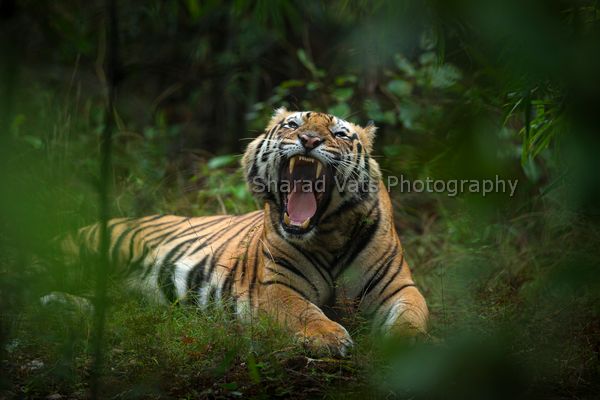
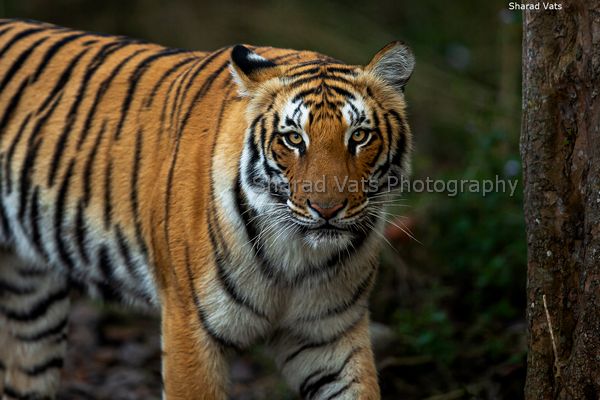
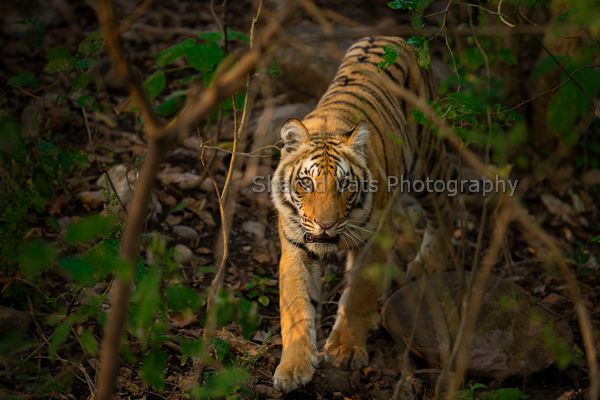
Elephant Safari, Corbett , National Parks in IndiaDay 13: In Corbett : Over 50 mammal, 580 bird and 25 reptile species have been listed in Corbett but it is most famous for the Royal Bengal Tiger. The very successful Project Tiger of the World Wildlife Fund was first launched in this park. The main attraction, however, is the elephant and one may see a herd or even a lone tusker cross the road. Wildlife populations include the leopard and smaller cats, sambar, cheetal - the beautiful spotted deer, barking deer, hog deer, wild boar, langur and rhesus monkeys, Sloth and Himalayan black bear, gharial and mugger crocodiles, ghoral and a host of avian attractions, especially when the winter migrants are in residence. The area is also famed for its excellent mahseer fishing, the great sporting fish of the subcontinent.

Overnight at Forest Lodge. Rest of the day Park visit by Jeeps.Afternoon Elephant Ride.

Day 14: Drive CORBETT to DELHI: After breakfast drive back to Delhi. Upon arrival proceed to the Hotel Taj Palace or similar for overnight stay.

Day 15:  In Delhi:  Day at leisure late evening transfer to the International airport to connect  your flight for onward destination

End Of Services.


Ladakh Trekking Tour , Ladakh Tours Reservation Form

(* represents compulsory fields)
*Your Name :  
*Your Country :  
* Phone :
(Include Country/Area Code)
 
*Your E-Mail Address :  
* Tentative Date of Travel:  
Duration of Travel
in India (Approx.):
 
No. of People Travelling:   Adult
  Children
if Other Please Specify :  
*Budget Per Person Per Day : USD 100-150 USD 151-200 USD 201-250
USD 251 and above
* Describe Your Travel Plan / Requirements :
* Verifiy your request: verification image, type it in the box 


INDIA CLASSIC JOURNEYS
- Agra Tourism - Best Tours of India - North India Tours - North India Travel Guide
- Rajasthan Tours - Rajasthan Travel Guide - Tourist Places of Rajasthan - Safari Adventure Tour
- Kerala Tours - kerala Travel Guide - Ladakh Tours - Ladakh Travel Guide
- South India Tours - South India Travel Guide - Discount Budget Tours India - Luxury Heritage Hotels
- Palace On Wheels Train - Deccan Odyssey Train - Kerala Spa Resorts - Spa Resorts
- Wildlife Tours - Wildlife Parks India - Map of India - Commendations
HOME - ABOUT US - CONTACT US - RESERVATION - MAIL - TRAVELER'S TOOLS