Northern India Tour
Duration: 19 Days / 18 Nights
Destinations: Delhi - Jaiselmer - Manwar - Jodphur
- Udaipur - Chhatra Sagar - Pushkar - Ranthambore - Delhi - Varanasi - Delhi
Day 1-2 : Fly USA to Bangkok (or via Europe)
Day 3 : Free day in Bangkok
5:00 p.m. flight to Delhi.
Day
4 : New Delhi/Old Delhi
We complete this tour during our visits at the beginning and end of the trip.
As the capital of five empires, Delhi’s sights are vast. In Old Delhi
we visit major architectural achievements including Lal Qila (The Red Fort)
and the Jami Masjid (Friday mosque) while taking time to wander the bustling
market streets. New Delhi sights include Humayan’s Tomb and the shrine
of Nizam-ud-din. Humayan’s tomb is one of the oldest examples of Moghul
architecture, precursor to the Taj Mahal. It’s a building filled with
raw energy, topped by giant domes, surrounded by linear gardens. We then visit
the neighborhood of Nizam-ud-din, the birthplace Quawali music. We also visit
the Jantar Mantar (built in 1725), a lunar and solar observatory (which looks
like a post-modern playground). The Jantar also has instruments used in predicting
eclipses. Should time permit we will and visit the Modern Art Museum, Hauz Khas
Village and the Lodhi tombs and gardens. We also visit some of the more obscure
shopping areas such as Dilli Haat and Pragati Maidan. Overnight 1st Class Train
to Jaiselmer.
Day 5 : Jaiselmer arrival
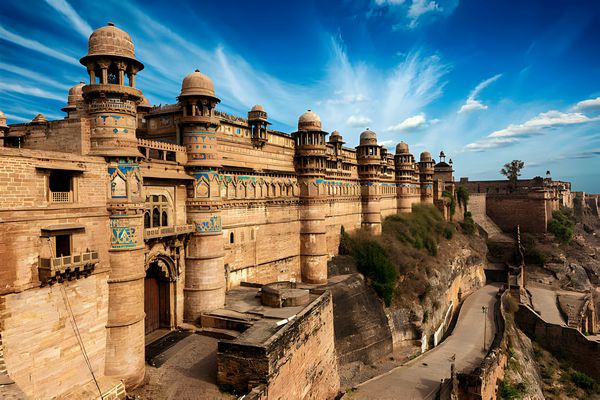
Taken straight from Tales of the Arabian Nights, this walled city of gold is
truly the “stuff dreams are made of.” Much time be spent wandering
the narrow streets of the old city and peering across the desert high up on
the ramparts. Your train will be arriving in Jaiselmer at 12.40 hours and we
transfer to hotel. Informal tour of old city.
Day
6 : Formal Tour Jaiselmer
Jaiselmer lies in the western extremity of Rajasthan, in the heart of the Thar
Desert. The ancient city, which stands on a low range of hills, surrounded by
a stone wall three miles round, was founded in 1156 AD. Within its walls lie
temples, forts and palaces, all built of yellow sandstone. The Jain Temples
in the fort are decked with deities and dancing figures in mythological settings.
The library attached to these places of worship contains some of the most ancient
manuscripts in India, some dating back to the 12th century, written on palm-leaf
in black ink with hand painted wooden covers. Down in the city are the renowned
Havelis or mansions of Salim Singh, Nathmalji and the Patwas, every house boasting
superb latticework in innumerable and intricate designs.
Day 7 : Manwar
Travel two hours to desert camp. This is a beautifully staged “resort”
style lodging in a remote area of the Thar desert. He we partake in a 3 hour
camel safari traveling across swaths of deserts between sand dunes. As this
area is rarely traveled by tourists, one easily harkens back to the era of camel
crossings and caravansaries, as the methodical rhythm of the camel helps us
transcend time. Following camel trek we return to our desert camp.
Day 8 : Drive to Jodphur (5-6 hours)
Depart in the early morning for Jodhpur. Afternoon proceed for the city tour
of Jodhpur. Jodhpur is the land of the valiant Rathore kings, whose courage
was a match for the tyranny of the Thar Desert. A bleak scarp rears up 120 meters
from the desert valley.

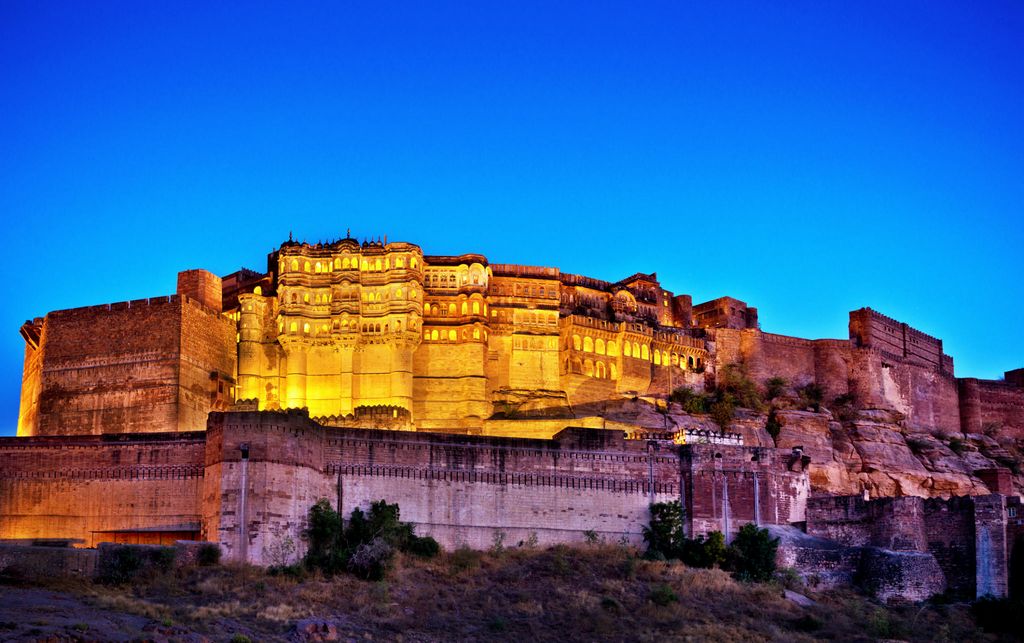
Straddling
the rocky crevices is the massive Jodhpur Fort, its sheer walls reflecting the
strength of its warrior builders. The fort is entered through seven gates, each
a formidable barrier. The museum within the fort is one of the finest in Rajasthan
and displays royal apparel, ancient paintings and manuscripts, fabled treasures
of the royal household and an armory. An interesting section displays folk musical
instruments from different regions of Rajasthan. Delicately latticed windows
and pierced screens worked in sandstone form the dominant motif within the rugged
casket of the fort and the palaces are exquisitely decorated. On the road down
from the fort, the splash of blinding white marble on the left is Jaswant Thada,
Maharaja Jaswant Singh II’s cenotaph, built in 1899 - all previous rulers
have their cenotaphs at Mandore. As with the Taj Mahal in Agra, the marble is
from Makrana. The town below has many more fine buildings and temples and is
interesting to walk through, particularly the market near the clock tower.
Day 9 : Drive to Udaipur
After breakfast a 6 hour drive takes you to Udaipur. En route a visit to Ranakpur,
the famous Jain temples of Ranakpur which lie buried in a shady glen and cover
a vast area. The central temple is called Chaumukha (four-faced) and is the
most complex and extensive of Jain temples in India, covering an area of over
40,000 sq. feet (3,600 sq. meters). 1,444 pillars, none of which are alike,
support its 29 halls. A subsidiary shrines in the shape of side alters throng
around in all directions, including a temple dedicated to the Sun God which
displays erotic carvings. Continue your drive to Udaipur. Hotel Lodging.
Day
10 Udaipur :
After breakfast depart for sightseeing of Udaipur city includes a visit to the
City Palace which stands on the crest of a ridge overlooking Lake Pichola. The
largest palace in Rajasthan, it was built at various periods but still preserves
the harmony of design, enhanced by massive octagonal towers surmounted by cupolas.
Now a museum, it is a labyrinth of courtyards richly decorated with inlaid mirror-work,
galleries covered with frescos, temples and roof gardens, which afford a wide
panorama below. Sahelion-ki-Bari (Garden of the Handmaidens) is a good example
of the Hindu art of landscaping on a princely scale. Ornamental pools with finely
sculptured cenotaphs of black stone are surrounded by a profusion of fountains.
The Jagdish Temple in the old town was built in the mid-17th century and has
a remarkable bronze statue of Garuda, the mythical bird, facing his revered
master Lord Vishnu. The shops and craftsmen’s ateliers in the narrow streets
of the bazaar justify endless walks.
In the evening take a boat ride on Lake Pichola. The steel blue waters of
the lake, artificially created in the 14th century, reflect the white phantom
Jag Nivas Palace, now the Lake Palace hotel which was built in 1746 as the
summer residence of the rulers, and Jag Mandir said to be built by Maharana
Karan Singh for his friend Prince Khurram, who was later to become emperor
Shah Jehan. Huge seamless stone slabs of translucent thinness where used.
The rooms were embellished with inlaid stones - onyx, jade, carnelian, jasper
and agate.
Day 11: Travel to Chhatra Sagar (4-5 hour journey)
An old Maharajah hunting area turned 5 star tent camp. This luxurious tented
area sits on the edge of a huge damn as we watch birds and wildlife traverse
the area. This certainly one of the most interesting and peaceful days of the
journey as we visit local villages who are practicing the timeless skills of
weaving, pottery and smithing, much as they have 500 years. In the morning those
interested can hike around the dam.
Day
12 : Pushkar (The small town of Pushkar lies 11 km northeast of Ajmer and is
an important pilgrimage centre for Hindus)
The sanctity of the lake is equal to that of Mansarover and Tibet. Throughout
the year, Pushkar has the atmosphere of an ancient religious town, peaceful
and secluded. But for 12 days in the month of Kartik, it is transformed into
a spectacular fairground that spreads over the dunes west of the town.
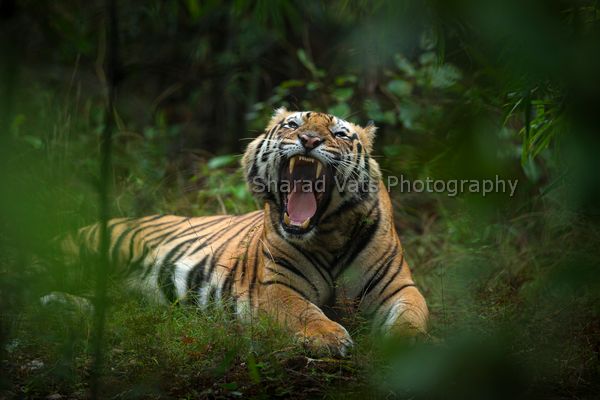
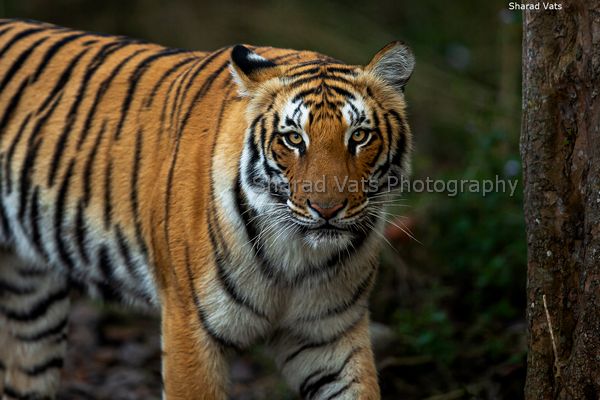
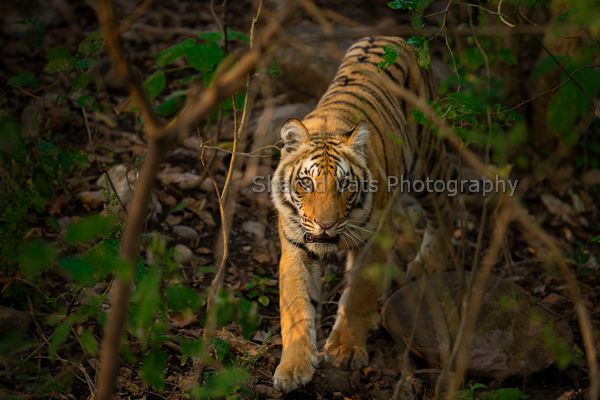
Day 13 : Drive to Ranthambore Tiger Reserve
After breakfast depart for a 5-hour drive to Ranthambore. On arrival check in
at the hotel Sawai Madhopur Lodge. Ranthambore is situated at the junction of
the Aravalli and Vindhya ranges. Since becoming one of the original 11 areas
under Project Tiger in 1973, the park has recovered much of its previous natural
glory. The blend between nature and history is strong in this park - the fort,
temples, tanks and other relics are a constant reminder of man’s involvement
in the area. The fort commanded a large region and up to the late 13th century
was the center of a Hindu kingdom. During the 18th century the area was protected
as a hunting area for and by the Maharajas of Jaipur and it is thanks to an
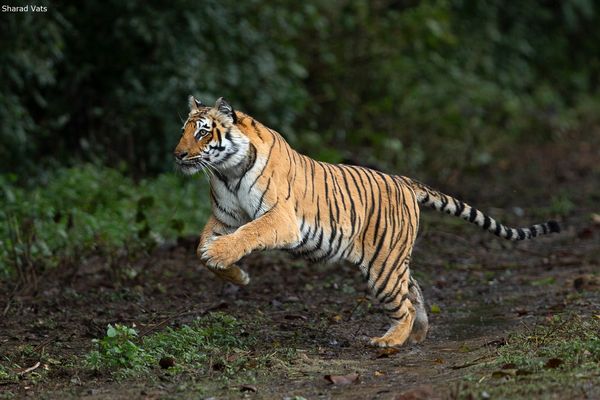
extension of this protection that the park exists today. Ranthambore has an
impressive range of animal species within its 150 sq. miles (392 sq. km), including
sambar, cheetal, nilgai, chinkara, wild boar, sloth bear, hyena, jackal, leopard
and tiger. The rich birdlife reflects the range of flora on which it feeds.
During the winter months, the lakes attract a variety of migrant water birds.
Afternoon wildlife viewing by jeep.
Day 14 : In Ranthambore
Morning and afternoon wildlife viewing by jeep.
Day 15 : Delhi
This morning you we transfer to railway station in time to board Kota/Delhi
Jan shatabdi Express departing at 07.15 hours and arriving at H. Nizam-ud-din
railway station (New Delhi) at 12.35 hours.
Day
16 : Fly to Varanasi
In the morning you will be transferred to the airport to board flight 9W 333
to Varanasi, departing at 1040 hours and arriving in Varanasi at 1150 hours.
Afternoon visit Sarnath, located 6 miles (9 km) from Varanasi, which is the
center of the Buddhist world, just as Varanasi is that for the Hindu. It was
here that Buddha preached his first sermon, partially recorded on one of its
stones. Dhamek Stupa dating back to 500 AD, is the largest with geometrical
ornaments on its wall. Dharmarajika Stupa was set up by emperor Ashoka to contain
the bodily relics of the Buddha. There is an outstanding museum, worth visiting.
Day 17 : In Varanasi
Early in the morning, before sunrise, depart for a boat ride on the sacred Ganges
River, where devout Hindus can be seen performing their daily ablutions. The
bathing ghats, over three miles in length, lead down from a steep bank to the
river and are the soul of the city. Here, where the wavelets of the Ganges lap
the last of the stone steps, can be seen young Hindu men practicing Hatha yoga,
older men seated, eyes closed in meditation, Brahmin priests under sunshades,
waiting to bless the passing pilgrims, and beggars sitting in serried ranks.
Manikarnika burning ghat is the chief cremation centre of Varanasi. Corpses
lined in white silk or linen are borne on bamboo stretchers to the smoking pyres,
where they are deposited to await their turn. Photography is not usually permitted
here. Return to hotel for breakfast. Afterwards, explore Varanasi, the religious
capital of the Hindu faith since the dawn of history. Known as Kashi in the
7th century BC it constitutes a microcosm of Indian life. No one knows how old
it really is - when Buddha came here in 550 BC, it was already a flourishing
ancient settlement. The town is one inextricable maze of small streets and alleyways,
hiding in disorderly array no less than 2,000 temples and shrines. Domes, pinnacles,
towers and derelict 18th-century palaces dominate the left bank of the Ganges
river. The streets are noisy, color is rife. Overnight at the Hotel.
Day 18 : Delhi
Flight to Delhi, transfer to Hotel and late night flight back to USA.
Day 19 Arrive USA.
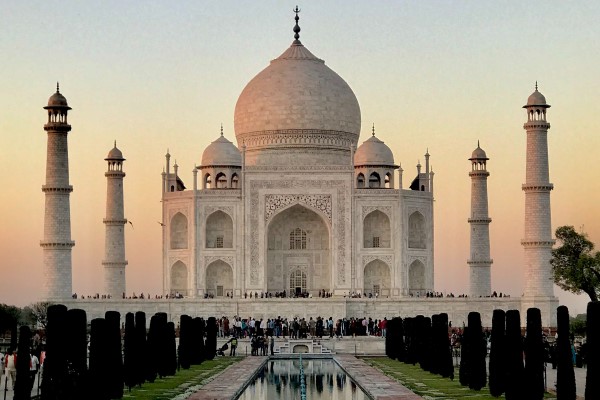
( Those interested can add a 2 day extension to
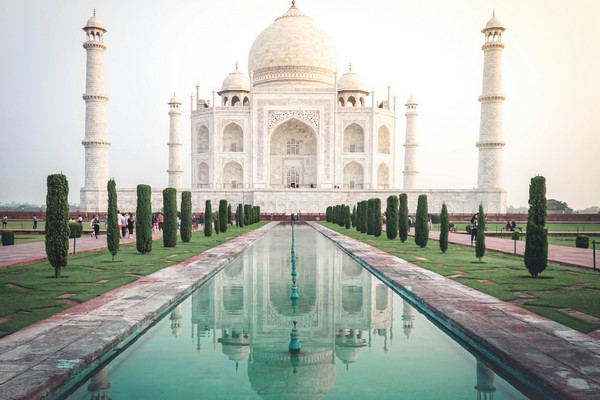
visit the Taj Mahal and other sites in Agra)
Travelers note :
Each day we will try to have some free time so one is not always on guided tour.
While we often eat meals together, they will not be pre-arranged which will
allow us the flexibility to eat at local establishments or at more preferred
hours. Hotels are subject to change.
Our net Per Person cost on twin Sharing basis in US Dollars for the above itinerary
| In a part of |
USD |
Tax |
With Escort |
Tax |
| 4 pax + 1 free |
2427 |
82.9 |
3028 |
107.4 |
| 5pax + 1 free |
2290 |
77.9 |
2771 |
97.5 |
| 6pax + 1 free |
2240 |
76.3 |
2641 |
92.6 |
| 7pax + 1 free |
2142 |
72.6 |
2486 |
86.7 |
| 8pax + 1 free |
2066 |
69.7 |
2367 |
82.0 |
| 9 pax + free |
2006 |
67.5 |
2273 |
78.4 |
| 10 pax + 1 free |
1853 |
62.0 |
2094 |
71.8 |
| 11pax + 1 free |
1817 |
60.6 |
2036 |
69.5 |
| 12Pax + 1 free |
1795 |
59.8 |
1995 |
67.9 |
| Single Room Supplement |
925 |
37.7 |
|
|
| Cost Valid
till April 2007 Except for the period of 15Dec’ 2006 to 15 Jan’
2007 |
Above cost includes –
Twin sharing accommodation :
Three nights at Taj Palace , New Delhi on bed and breakfast basis.
Two nights at Rawal Kot , Jaiselmer on bed and breakfast basis.
One night at Manwar Camp, Manwar on full board basis.
One night at Ajit Bhawan Palace, Jodhpur on bed and breakfast basis.
Two nights at Trident Hilton, Udaipur on bed and breakfast basis.
One night at Chatra Sagar, Chatra Sagar ( Nimaj) on full board basis.
Two nights at Tiger Den, Ranthambore on full board basis.
Two nights at Taj Ganges Varanasi, Varanasi on bed and breakfast basis.
With currently applicable taxes.
Transport :
A/C coach in Delhi transfers and one half day sightseeing. Rajasthan and Varanasi
for all the transfers, drives as per itinerary.
Sightseeing :
half-day sightseeingin Jaiselmer, half day city tour and boat ride with local
English speaking guide, inclusive of entrance fees.
Two hour Camel Safari with overnight stay in tents.
Train Journey :
Three tier A/C sleeper class on Delhi to Jaiselmer sector (This is best sleeper
class available on this train) .
A/C Chair Car on Sawai Madhopur to New Delhi sector.
Wild life viewing view by non A/C jeep. Inclusive of entrance fees only (camera
fees not included).
Above cost includes currently applicable economy class airfare for the sector
Delhi / Varanasi/ Delhi sector.
Cost Excludes :
Meals in Delhi, Jaiselmer, Jodhpur, Udaipur, Varansi.
Expenses of personel nature i.e communication charges, table drinks, laundry,
tips, personal insurance, camera fees at the monuments and park etc.
Sightseeing in any other places not mentioned in include section. Guide and
entrance fees in any other places then included sction.
Emergency / medical expenses
Any other expenses not mentioned above.
Currently applicable economy class airfare is included, incase of increase it
will be passed on to the clients.
Note – At the time of tour operation, incase of fuel hike or government
levies taxes other then currently applicable taxes will be passed on to the
pax
COST FOR THE AGRA EXTENSION
Our net Per Person cost on twin Sharing basis in US Dollars for the above itinerary
| In a part of |
USD |
Tax |
| 4 pax |
457 |
18.6 |
| 5 pax |
398 |
16.2 |
| 6 pax |
374 |
15.2 |
| 7 pax |
367 |
14.9 |
| 8 pax |
357 |
14.5 |
| 9 pax |
345 |
14.0 |
| 10 pax |
335 |
13.6 |
| 11 pax |
327 |
13.3 |
| 12 Pax |
321 |
13.0 |
| Single Room Supplement |
225 |
9.1 |
| Above Cost Includes |
Twin sharing accommodations :
One night at Taj Palace on bed and breakfast basis.
One night at Jay Pee Palace, Agra on bed and breakfast basis.
With currently applicable taxes.
Transport :
A/C coach in Delhi Transfers and Agra sightseeing, drives , all as per itinerary.
Sightseeing :
Sightseeing of Agra Fort, Taj, Fatehpur Sikari in Agra with local English speaking
guide. , inclusive of entrance fees.
Train Journey :
A/C chair car New Delhi to Agra.
Local Escort.
Quote Excludes :
Meals in Delhi and Agra.
Expenses of personel nature i.e communication charges, table drinks, laundry,
tips, personal insurance, camera fees at the monuments and park etc.
Sightseeing in any other places not mentioned in include section. Guide and
entrance fees in any other places then included sction.
Emergency / medical expenses
Any other expenses not mentioned above.
Note – At the time of tour operation, incase of fuel hike or government
levies taxes other then currently applicable taxes will be passed on to the
pax.
Northern India Tour Reservation Form