Wildlife Tours in India India Classic Journeys
Wildlife Tours in India  
          Home  About Us    Contact Us    Reservation    E-Mail    Traveler's Tools
Cultural Journey
Taj Mahal, Agra Travel
- Agra Travel
- Kerala Travel
- Ladakh Travel
- North India Travel
- Rajasthan Travel
- South India Travel
- Rajasthan Places
Plan Your Journey
Backwater, Kerala Tour
- Tour to Kerala
- Tour to Ladakh
- Tour to South India
- Tour to North India
- Tour to Rajasthan
Wildlife Safari Adventure Journey
Tigers, Wildlife Safari Adventure Tour
- Safari Adventure Tour
- Wildlife Tours
- Wildlife Parks India
Luxury Train Journey
Luxury Train Tour
- Palace on Wheels Luxury Train
- Deccan Odyssey Luxury Train
The Best of Classic Journey
Ladakh Tour
- Ladakh Cultural Tour
- Orissa Tribes & Nature Tour
- Rajasthan India Tour
- Tiger Photographic safari
- Birding Tour of North India
- North India Cultural Tours
- Classical South India Tour
- Rajasthan Heritage Trip
- Sikkim & Bhutan Tour
- Ganges Boat Tour
- Tribal Tour of India
- Indian Village Tour
Budget Tours in India
Khajuraho Tour
- Golden Triangle Tour
- Great Taj Mahal Tour
- India Nepal Tour
- Khajuraho Temple Tour
- Budget Wildlife Tours
- Splendid Gujarat Tour
- East India Cultural Tour
- Buddha Tour
- Central India Heritage Tour
- Ladakh Tribal Tour
- Tamilnadu Tour
Spa Ayurveda & Rejuvination
- Spa Resort in India
- Kerala Spa Resorts
 
Lake Pichola, Classic Journey
 
"Without knowing it, we utilize hundreds of products each day that owe their origin to wild animals and plants. Indeed our welfare is intimately tied up with the welfare of wildlife.Wellmayconservationists proclaim that by saving the lives of wild species, we may be saving our own."- Norman Myers, A Wealth of Wild Species
----------------------------------------
"I am pessimistic about the human race Because it is too ingenious for its own good. Our approach to nature is to beat it into submission. We would stand a better chance of survival if We accommodated ourselves to this planet And viewed it appreciatively instead of Skeptically and dictatorially".
- E.B. White
----------------------------------------


Wildlife Parks in India

Bandhavgarh National Park

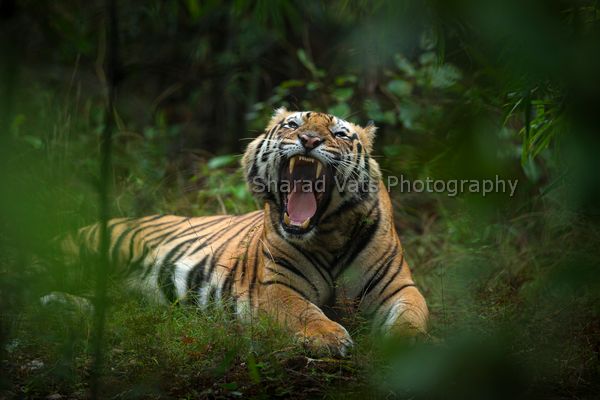
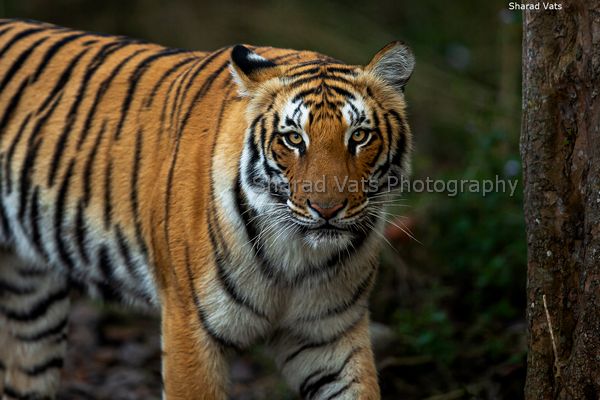
Tiger, Bandhavgarh  National Park in IndiaIn 1217 A.D. a young adventurer departed from his native Venice on a voyage of discovery. Among the other incredible stories he related in his "Book of Marvels", he spoke of a wondrous land filled with curious animals, like elephants, rhinos and the great striped cats. That land was India. The man was Marco Polo.

For long, Africa has been regarded as the Mecca of Wildlife. Justifiably so, but in the recent years the natural wealth of the Indian Subcontinent has begun to offer naturalists, tourists and researchers a fascinating alternative to the once dark continent.

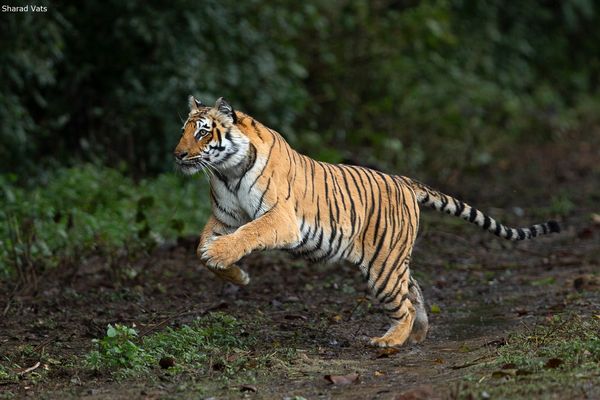
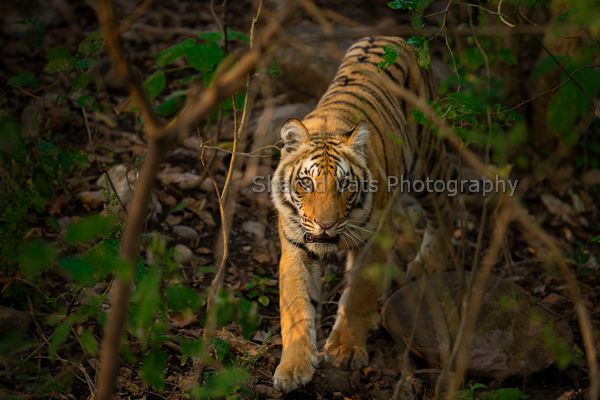
Now, imagine yourself in an open Gypsy slowly and silently cruising along a dense forest trail, listening to the alarm calls of a Langur warning the presence of a Tiger. You feel a tingling sensation in the nape of your neck as the forest floor quietens, and you silently watch, through the early morning mist, a faint image of yellow and black stripes crossing the trail ahead. You move on, as the early rays of the sun make an array of magical shapes through the trees across the forest floor, and your lungs revel in the fresh morning air.

Such is the experience at Bandhavgarh National Park; one of the few remaining havens for the pride of Indian Wildlife - the Royal Bengal Tiger.

Bandhavgarh is a new National Park with a very long history. Set among the Vindhya hills of Madhya Pradesh with an area of 168sq miles (437sq kms) it contains a wide variety of habitats and a high density of game, including a large number of Tigers. This is also the White tiger country. These have been found in the old state of Rewa for many years. The last known was captured by Maharaja Martand Singh in 1951. This white Tiger, Mohun is now stuffed and on display in the Palace of Maharaja of Rewa.

Prior to becoming a National Park, the forests around Bandhavgarh had long been maintained as a Shikargarh, or game preserve of the Maharaja of Rewa. The Maharaja and his guests carried out hunting - otherwise the wildlife was well protected. It was considered a good omen for Maharaja of Rewa to shoot 109 tigers. His Highness Maharaja Venkat Raman Singh shot 111 Tigers by 1914.

History
Bandhavgarh National Park in IndiaBandhavgarh has been a center of human activity and settlement for over 2000 years, and there are references to it in the ancient books, the Narad-Panch Ratra and the Shiva Purana. Legend has it that Lord Rama, hero of the Hindu epic, the Ramayana, stopped at Bandhavgarh on his way back to his homeland after defeating the demon King Ravana of Lanka.

Two monkey architects, who had engineered a bridge between the isles of Lanka and the mainland, are said to have built Bandhavgarh's fort. Later Rama handed it over to his brother Lakshmana who became known as Bandhavdhish "The Lord of the Fort". Lakshmana is the particular God of the fort and is regularly worshipped in a temple there.

The oldest sign of habitation in the park are caves dug into the sandstone to the north of the fort. Several contain Brahmi inscriptions dating from the 1st century B.C. Various dynasties have ruled the fort, for example, the Maghas from the 1st century A.D., the Vakatakas from the 3rd century A.D., From that time onwards Bandhavgarh was ruled by a succession of dynasties including the Chandela Kings of Bundelkhand who built the famous temples at Khajuraho.

The Baghel Kings, the direct ancestors of the present Royal family of Rewa, established their dynasty at Bandhavgarh in the 12th century. It remained their capital till 1617 when the center of court life moved to Rewa, 75 miles (120Kms) to the north. Without royal patronage Bandhavgarh became more and more deserted until forest overran the area band it became the royal hunting reserve. This helped to preserve the forest and its wildlife, although the Maharajas made full use of their rights. Each set out to kill the auspicious number of 109 Tigers.

At independence Bandhavgarh remained the private property of the Maharaja until he gave it to the state for the formation of the National Park in 1968. After the park was created poaching was brought under control and the number of animals rose dramatically. Small dams and water holes were built to solve the problem of water shortage. Grazing by local cattle was stopped and the village within the park boundaries was relocated. The Tigers in particular prospered and the 1986 extension provided much needed forest to accommodate them.

The Fort
Bandhavgarh National Park in IndiaThe fort still belongs to the Maharaja of Rewa and permission is required to visit it. However permission is available locally and no trip to Bandhavgarh is complete without making an effort to climb up the fort.

The natural ramparts of the fort give breathtaking view of the surrounding countryside. Vultures wheel around the precipice, which also attracts blue rock thrushes and crag martins. The fort has a small population of Blackbuck, which have been reintroduced and to some extent protected from Tigers in the park below by repairs to the masonry walls at the edges of the fort.

Thus Bandhavgarh offers excellent game and bird viewing and a historical interest which most other parks lack.

Geography Flora and Fauna
There are 32 hills in this part of the park, which has a large natural fort at its center. The fort's cliffs are 2625 feet (800 meters) high, 1000 feet (300 meters) above the surrounding countryside. Over half the area is covered by Sal forest although on the upper slope it is replaced by mixed forest of sal, saj, dhobin, and saja. Winter temperatures (Nov-mid-February) vary from almost freezing at night to around 68 degree Fahrenheit in the daytime. Summer nights are also cooler than the daytime temperature, which rises to 104 degree Fahrenheit. This park is closed during the breeding season, which coincides with the monsoon (July-October). Rainfall in the park averages 50 inches (120cm) per year.

Within the Park
Bandhavgarh is justifiably famous for its Tigers, but it has a wide range of other game. The undergrowth is not as dense as in some northern terai forests, but the best time to see the park inhabitants is still the summer months when water becomes more scarce and the undergrowth dies back.

The most effective way to search for Tigers is on elephant back. It's advisable to book your elephant in advance and to wear plenty of warm clothings if going for an early morning ride in winter. The mahouts are kept well informed of the whereabouts of the nearest Tigers. However there are many tigers in the park and the elephants are able to take you up steep, rocky hillsides and down marshy riverbeds, which are impassable to vehicles.

Deer, Bandhavgarh National Park in IndiaThere are several good weather roads in the park. Jeeps are definitely recommended over other vehicles and can be hired from the Tiger's Den resort. A forest guide must accompany all visitors into the park. Entry in to the park is allowed only during daylight hours. For both elephants and jeep rides the hours immediately after dawn and before sunset are best.

Chinkara, still rather shy, can be sighted on the grassland areas of the park, particularly on the formerly cultivated land in the southern extension area, on the edges of the main viewing area. Also to be seen in the grasslands are nilgai, chausingha, and sounders of wild boar, as well as the occasional jackal or fox. Muntjac and sambhar prefer denser vegetation. The main prey animal, however for the Tigers and the park's rarely sighted leopards are the chital, which now number a few thousand.

There are two types of monkeys common in the park, the rhesus macaque and the black-faced langur. Drives can also reveal jungle cats, hyenas, porcupines, ratels, and a variety of other mammals. Bandhavgarh attracts many migratory birds in the winter months, including the birds of prey like the steppe eagle and a variety of wildfowl.

If the early morning Safari is a thriller then the late afternoon rendezvous to get another glimpse of the Tiger, and watch the shadows grow taller as dusk approaches and the cacophony of birds grows louder in the trees, is not to be missed experience.

The nights in Bandhavgarh are an enigma- the twigs of the bonfire crackling in the resort lawn, combined with the calling of the jackal, the silhouettes of the trees against a starlit sky and perhaps, a distant rumbling roar deep in the heart of the forest.

It's an experience of elation and sadness. Elation; to have experienced a part of our rich bio-diversity. Sadness; considering the state of the dwindling Tiger population and our depleting forest reserve …will our children ever be able to witness nature in all its pristine glory? I wonder….


Bandhavgarh National Park , Wildlife Parks in India
Reservation Form

(* represents compulsory fields)
*Your Name :  
*Your Country :  
* Phone :
(Include Country/Area Code)
 
*Your E-Mail Address :  
* Tentative
Date of Travel:
 
Duration of Travel
in India (Approx.):
 
No. of People
Travelling:
  Adult
  Children
if Other Please
Specify :
 
*Budget Per Person Per Day : USD 100-150 USD 151-200 USD 201-250
USD 251 and above
* Describe Your Travel Plan / Requirements :
* Verifiy your request: verification image, type it in the box 
Note » Bandhavgarh National Park Close Between 30th to June 1 October


INDIA CLASSIC JOURNEYS
- Agra Tourism - Best Tours of India - North India Tours - North India Travel Guide
- Rajasthan Tours - Rajasthan Travel Guide - Tourist Places of Rajasthan - Safari Adventure Tour
- Kerala Tours - kerala Travel Guide - Ladakh Tours - Ladakh Travel Guide
- South India Tours - South India Travel Guide - Discount Budget Tours India - Luxury Heritage Hotels
- Palace On Wheels Train - Deccan Odyssey Train - Kerala Spa Resorts - Spa Resorts
- Wildlife Tours - Wildlife Parks India - Map of India - Commendations
HOME - ABOUT US - CONTACT US - RESERVATION - MAIL - TRAVELER'S TOOLS